
Love & relationships
50 Romantic Love Quotes & Where They Come From
Words for anniversaries, weddings, vows, and the ordinary days that make a relationship last.
Love can be difficult to put into words precisely because it contains so much: safety, longing, friendship, desire, patience, and the private language two people build over time. The fifty quotations below come at it from every one of those angles, in lines from Austen, Shakespeare, Dickinson, Tagore, and seventeen other writers who managed to say it well.
Under each one is a single line about the scene it comes from: a proposal that stumbles over its own words, a letter written after eight years apart, a couple dozing by the fire in the last stanza. A few were written to be read aloud at a wedding. Most were written for one person. Take the line that sounds like the two of you, or just enjoy the warmth of the words.
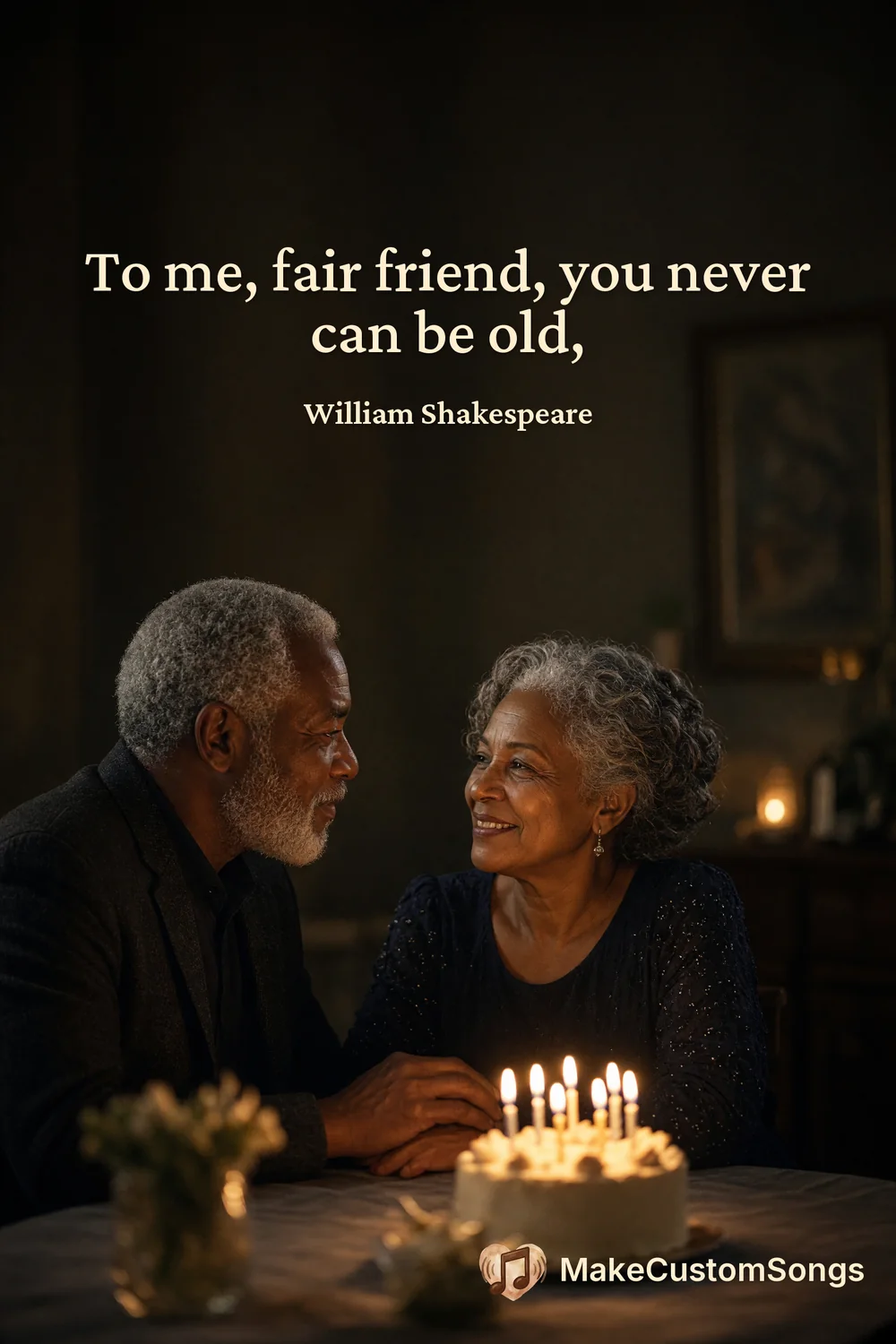
“To me, fair friend, you never can be old,” — William Shakespeare
Three winters and three summers have passed since they first met, the sonnet counts, and the friend looks exactly as they did at the start.
Source: Shakespeare's Sonnets — Sonnet CIV (104), opening line
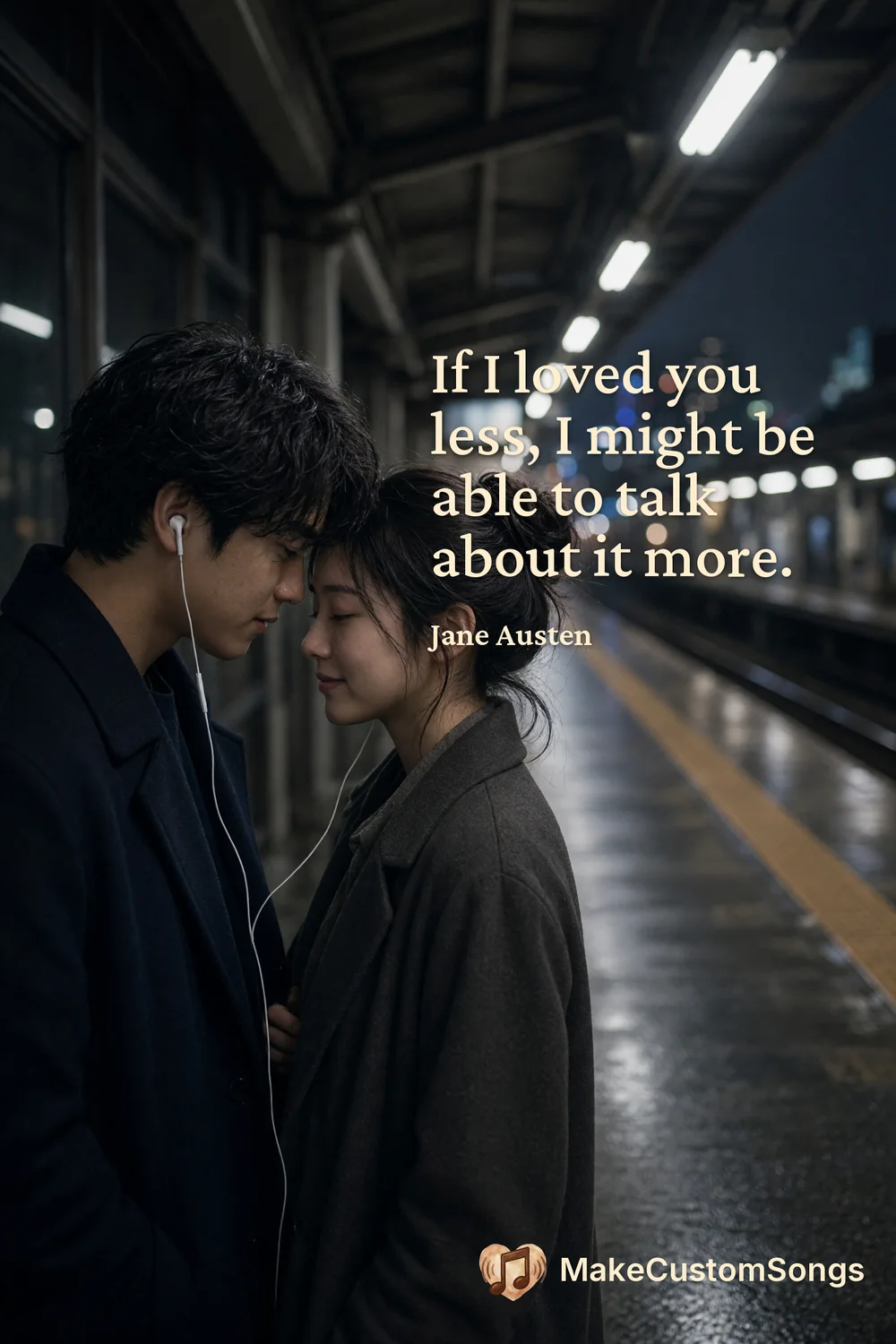
“If I loved you less, I might be able to talk about it more.” — Jane Austen
Mr Knightley says this in the middle of proposing to Emma, right after admitting he has spent years blaming and lecturing her.
Source: Emma — Volume III, chapter XIII (continuous chapter 49), Mr Knightley's proposal
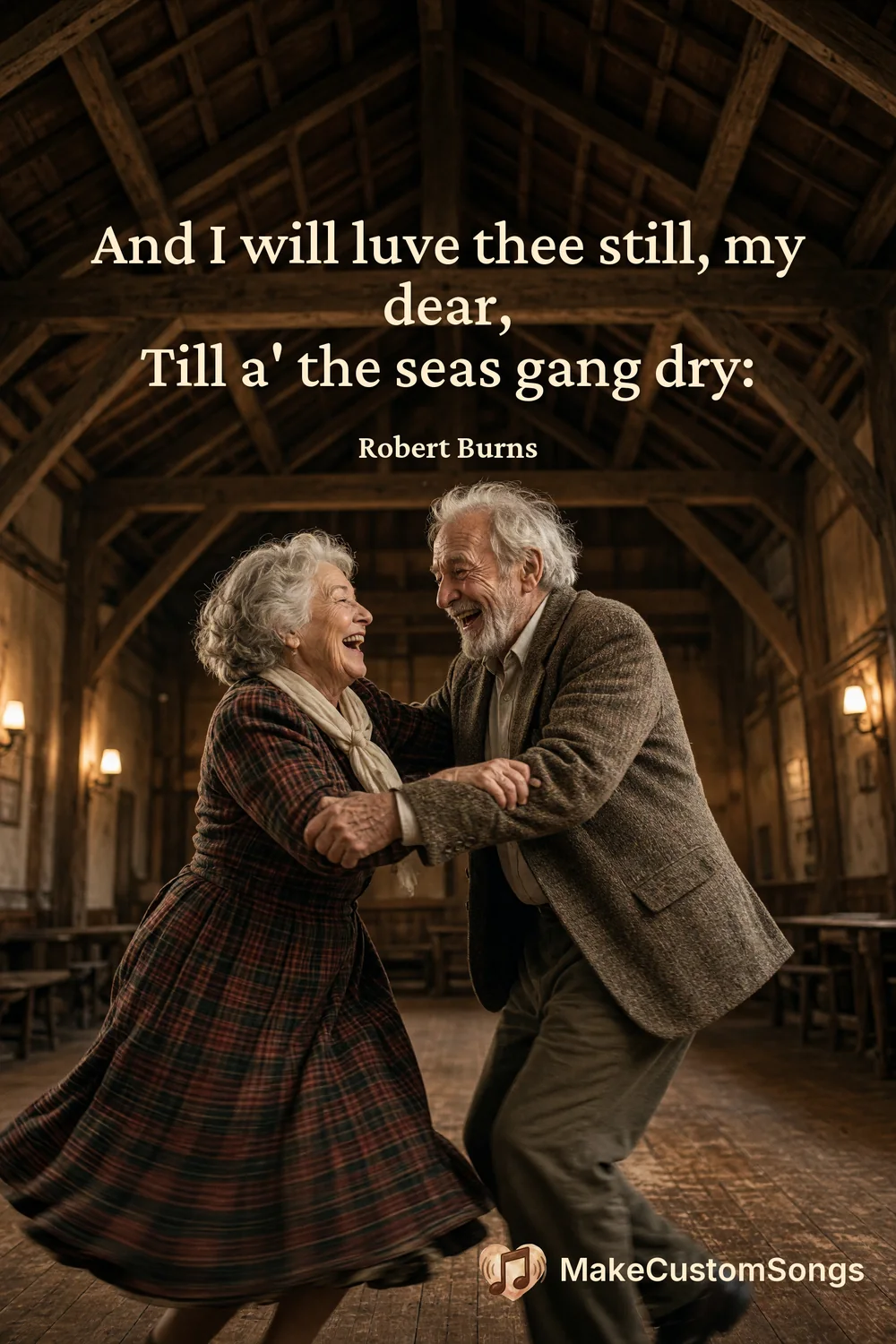
“And I will luve thee still, my dear,
Till a' the seas gang dry:” — Robert Burns
Burns's promise from A Red, Red Rose; the song carries on until the rocks melt with the sun, and while the sands of life shall run.
Source: The Golden Treasury — Poem CXC (190), A Red, Red Rose, lines 7–8
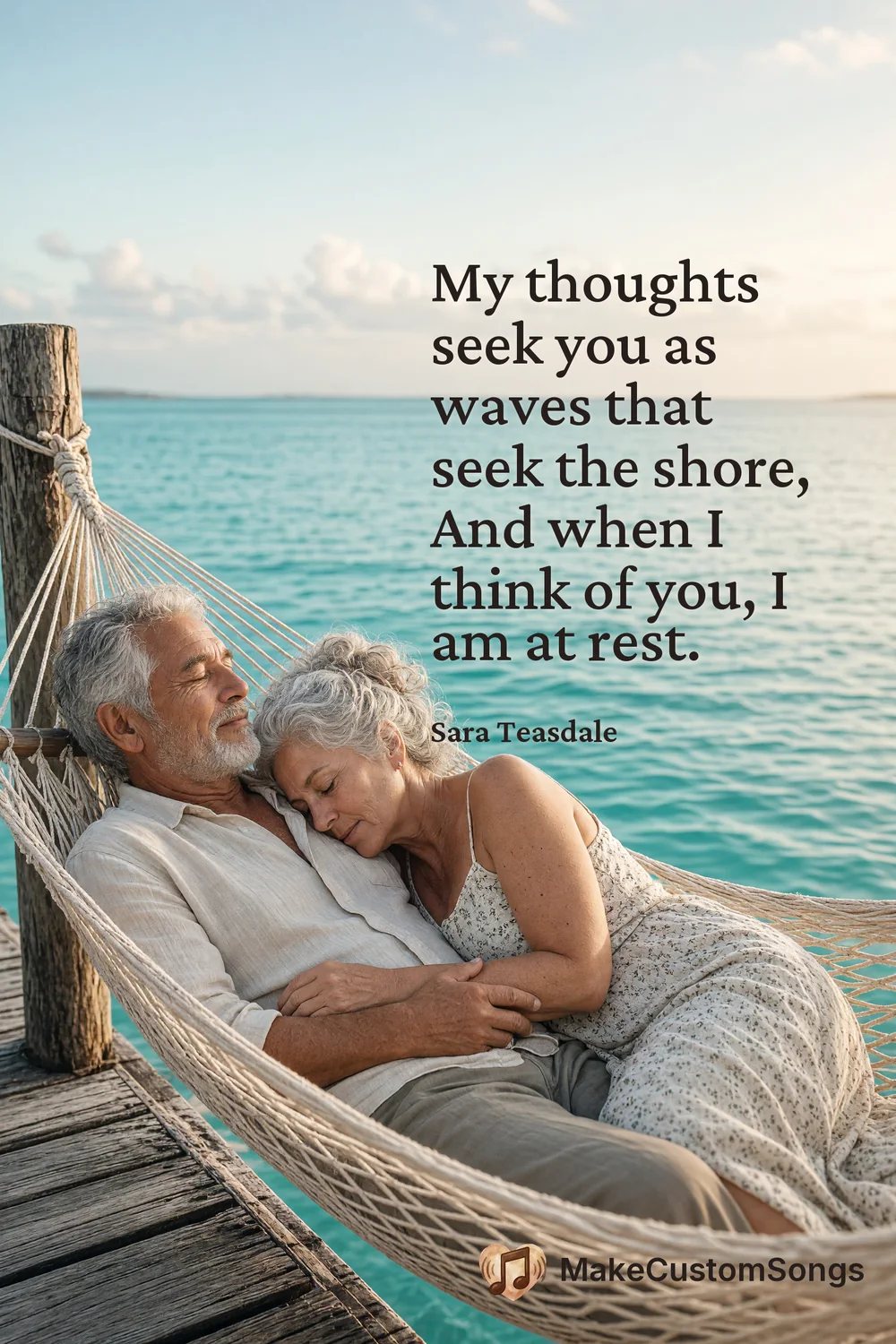
“My thoughts seek you as waves that seek the shore,
And when I think of you, I am at rest.” — Sara Teasdale
The closing lines of the dedication poem at the front of Love Songs, addressed to E., the initial of Teasdale's husband, whom she calls the rarest soul she ever knew.
Source: Love Songs — To E., closing two lines
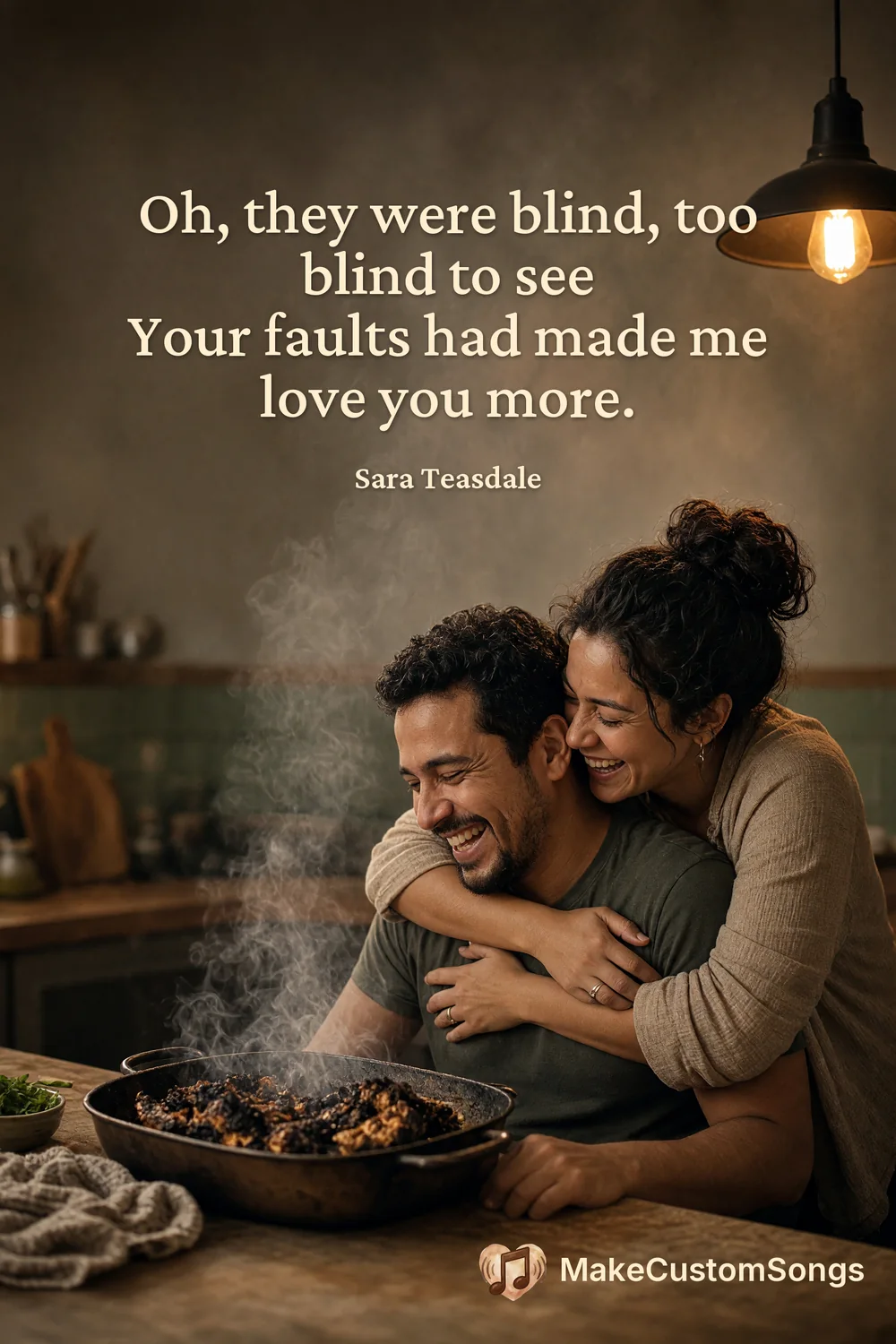
“Oh, they were blind, too blind to see
Your faults had made me love you more.” — Sara Teasdale
People had come to list his faults to her, one by one; she laughed when they finished, because she already knew every one of them.
Source: Love Songs — Faults, closing two lines
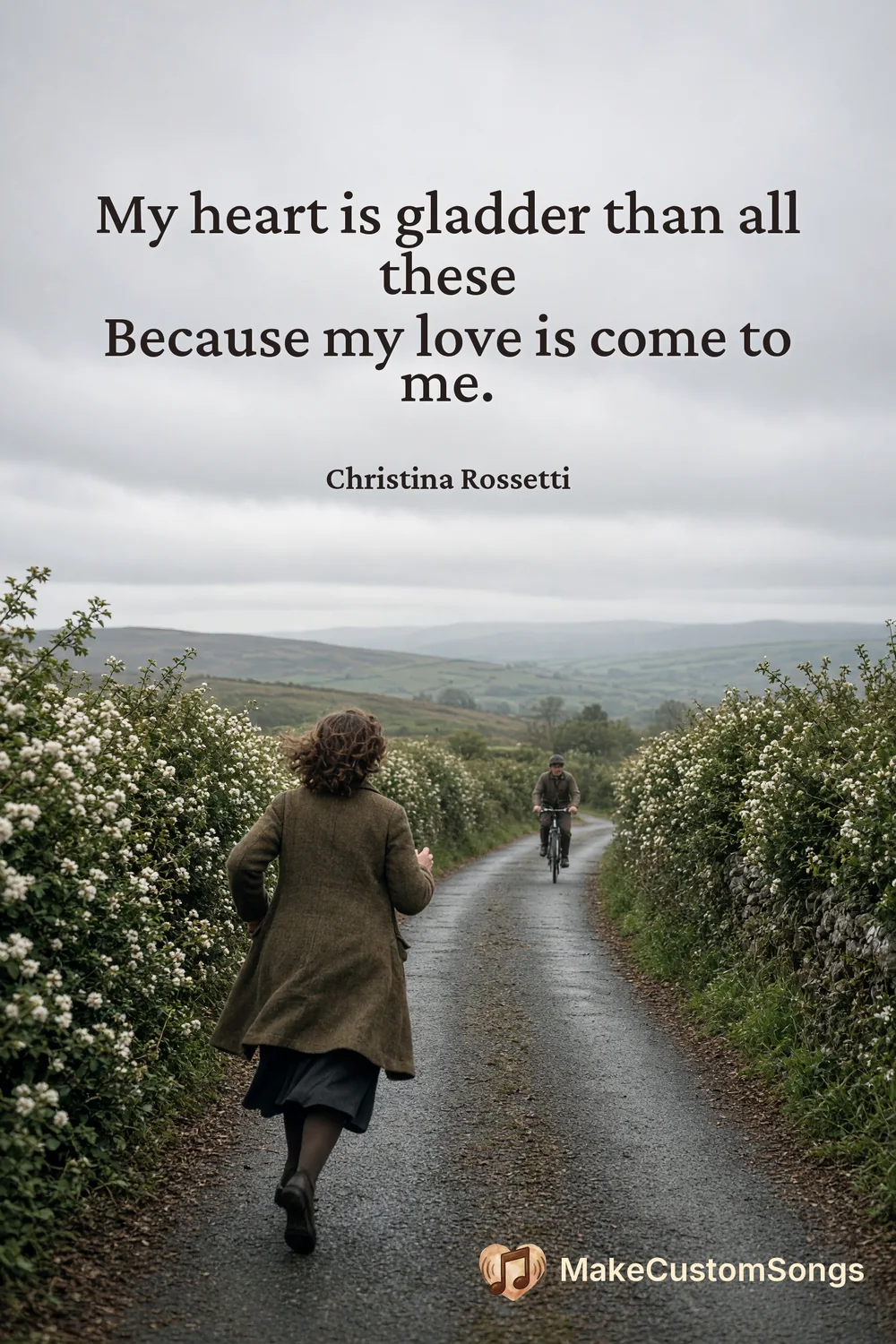
“My heart is gladder than all these
Because my love is come to me.” — Christina Rossetti
The speaker has just compared her heart to a fruit-laden bough and a rainbow shell on a calm sea, and says none of them is as glad as she is now that her love has come.
Source: Poems — A Birthday, lines 7–8
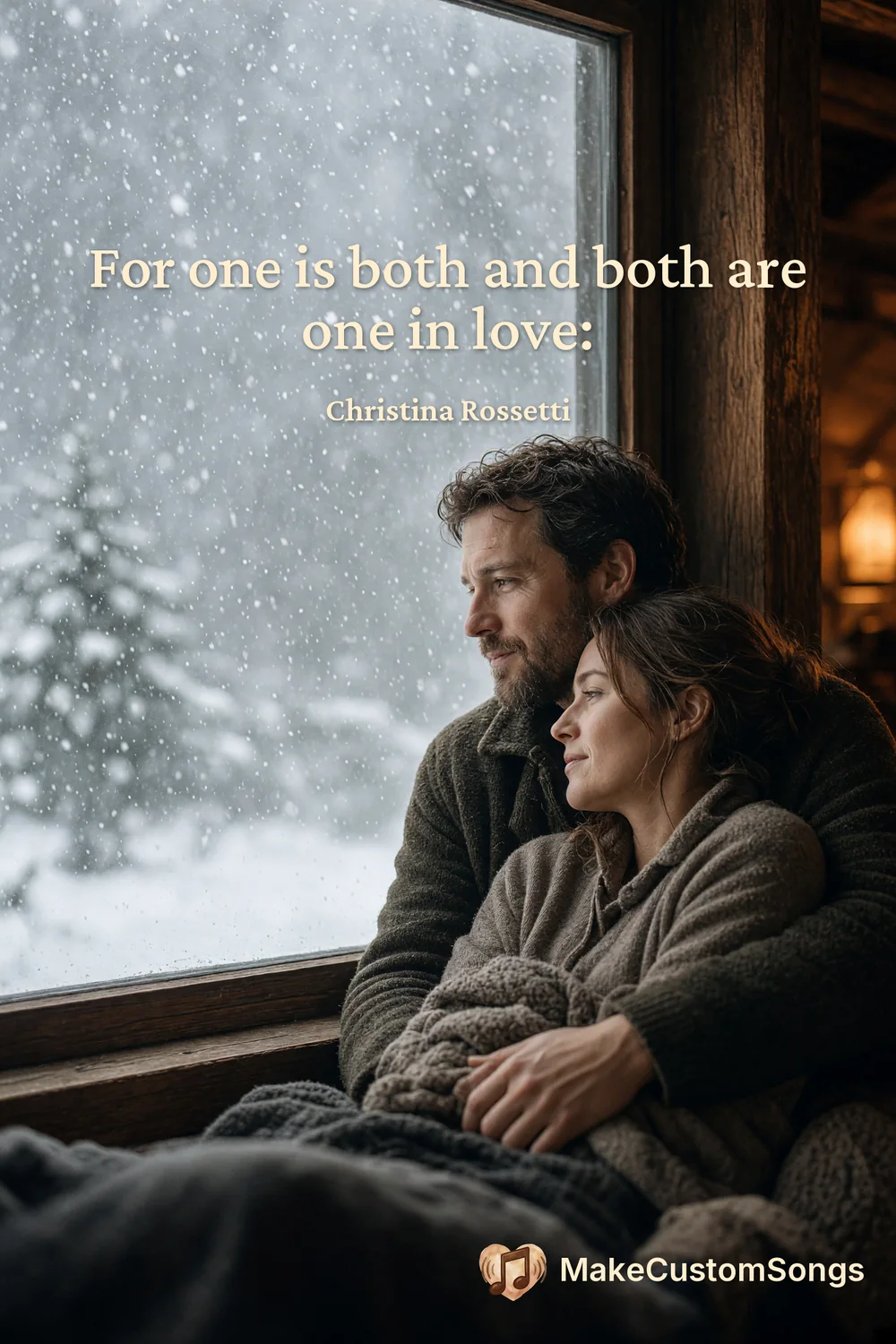
“For one is both and both are one in love:” — Christina Rossetti
The sonnet says love has no use for the words mine and thine, and that once two people belong to each other the separate I and thou are gone.
Source: Poems — Monna Innominata, sonnet 4, line 11
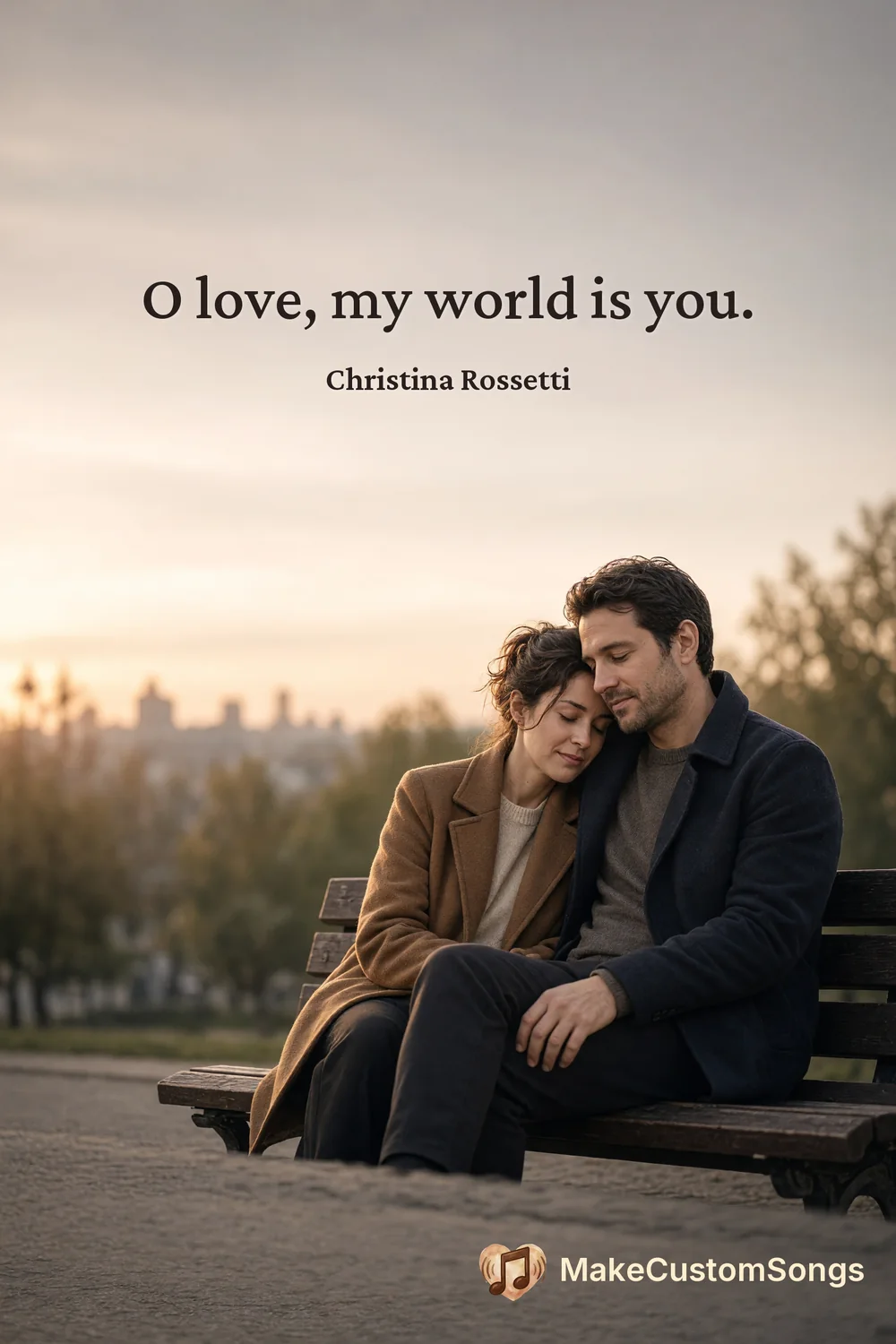
“O love, my world is you.” — Christina Rossetti
The speaker has just said that of all the men the wide world holds, one is her world; the next lines admit that meeting him is almost painful because parting comes so soon.
Source: Poems — Monna Innominata, sonnet 1, end of line 8
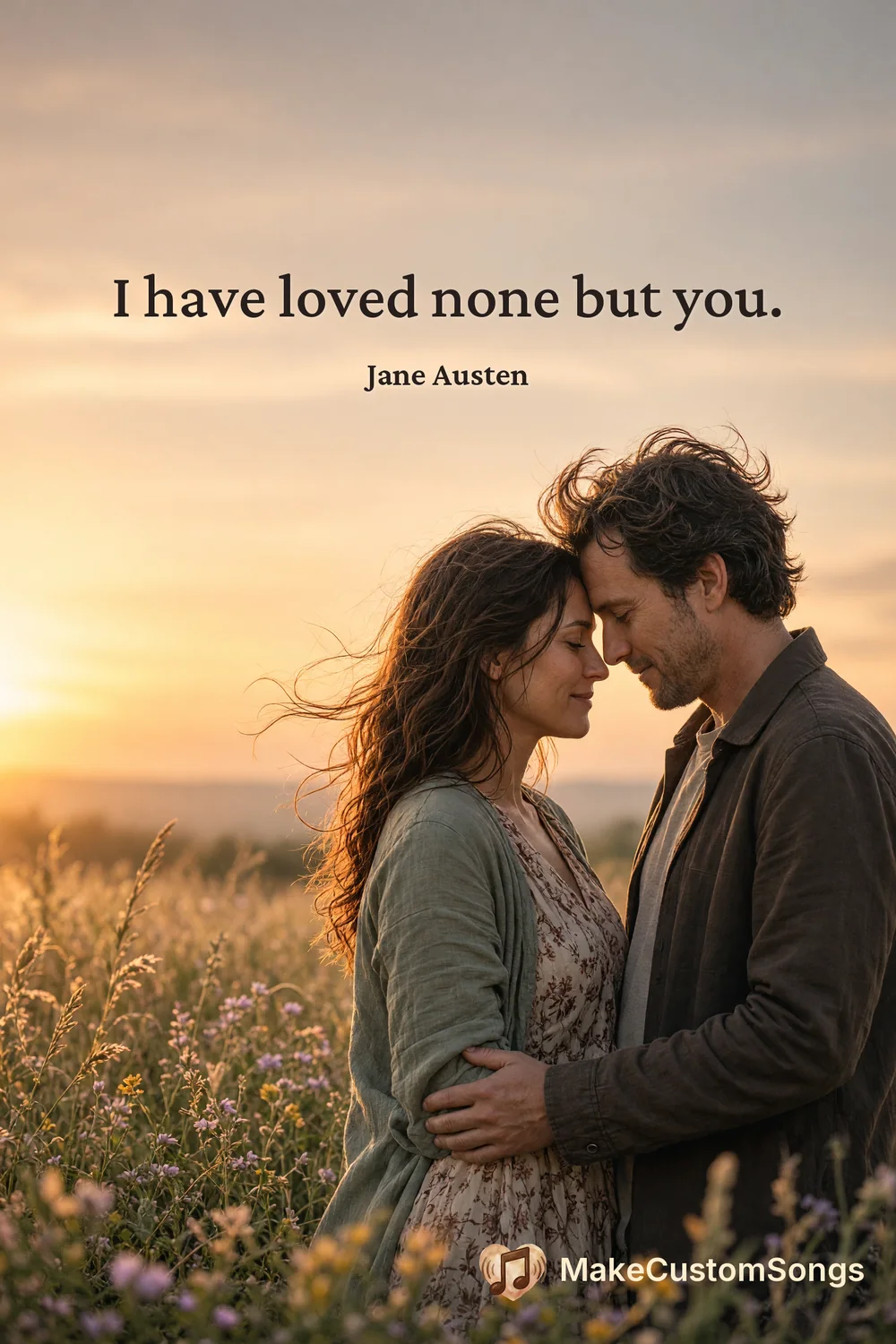
“I have loved none but you.” — Jane Austen
Captain Wentworth writes this to Anne Elliot eight and a half years after she was persuaded to break their engagement, admitting he has been unjust and resentful, but never inconstant.
Source: Persuasion — Chapter 23, Captain Wentworth's letter to Anne Elliot
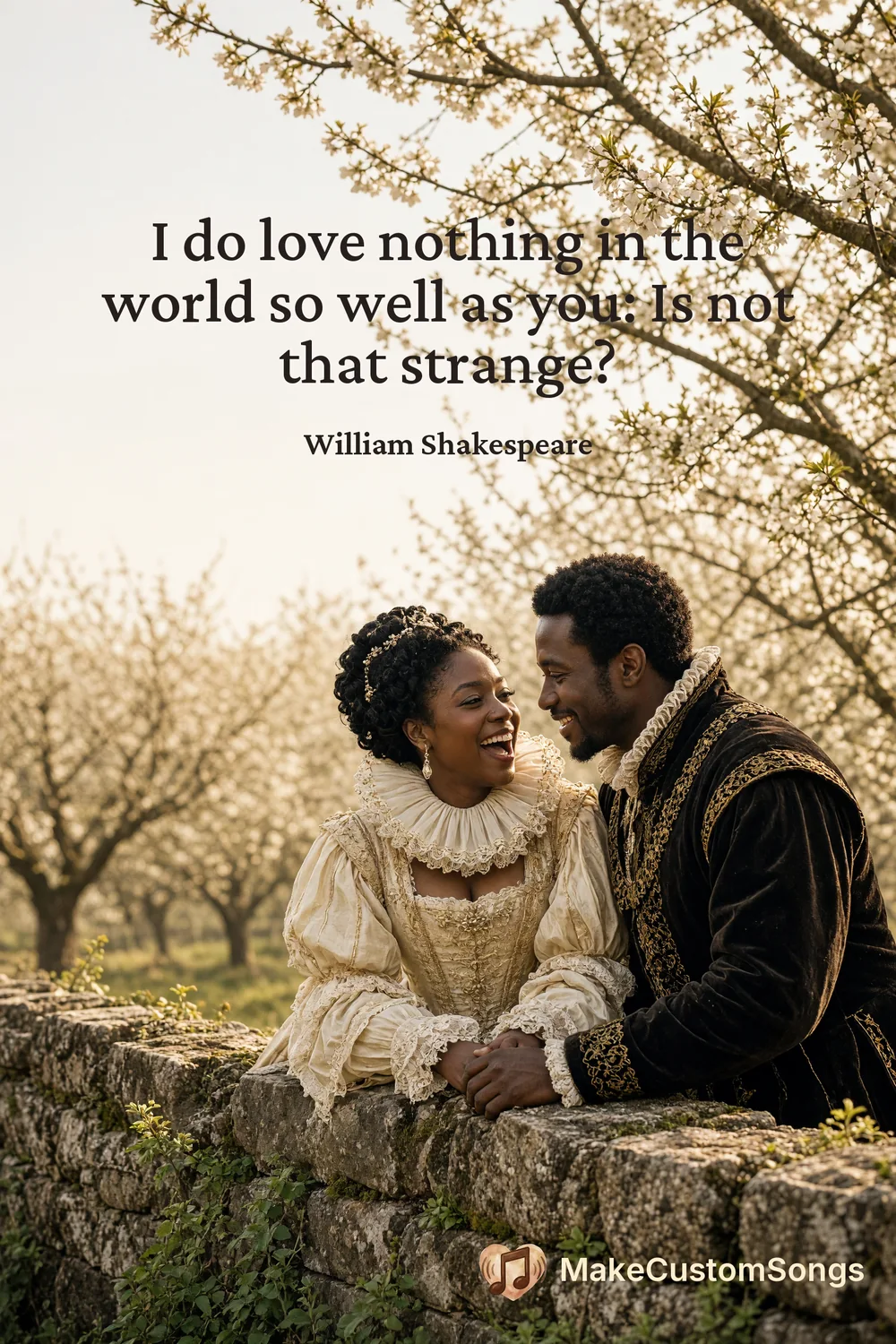
“I do love nothing in the world so well as you: Is not that strange?” — William Shakespeare
Benedick and Beatrice have spent the whole play trading insults; when he finally says it, she answers that she cannot say the same, and yet she is not lying.
Source: Much Ado about Nothing — Act IV, scene I, Benedick to Beatrice
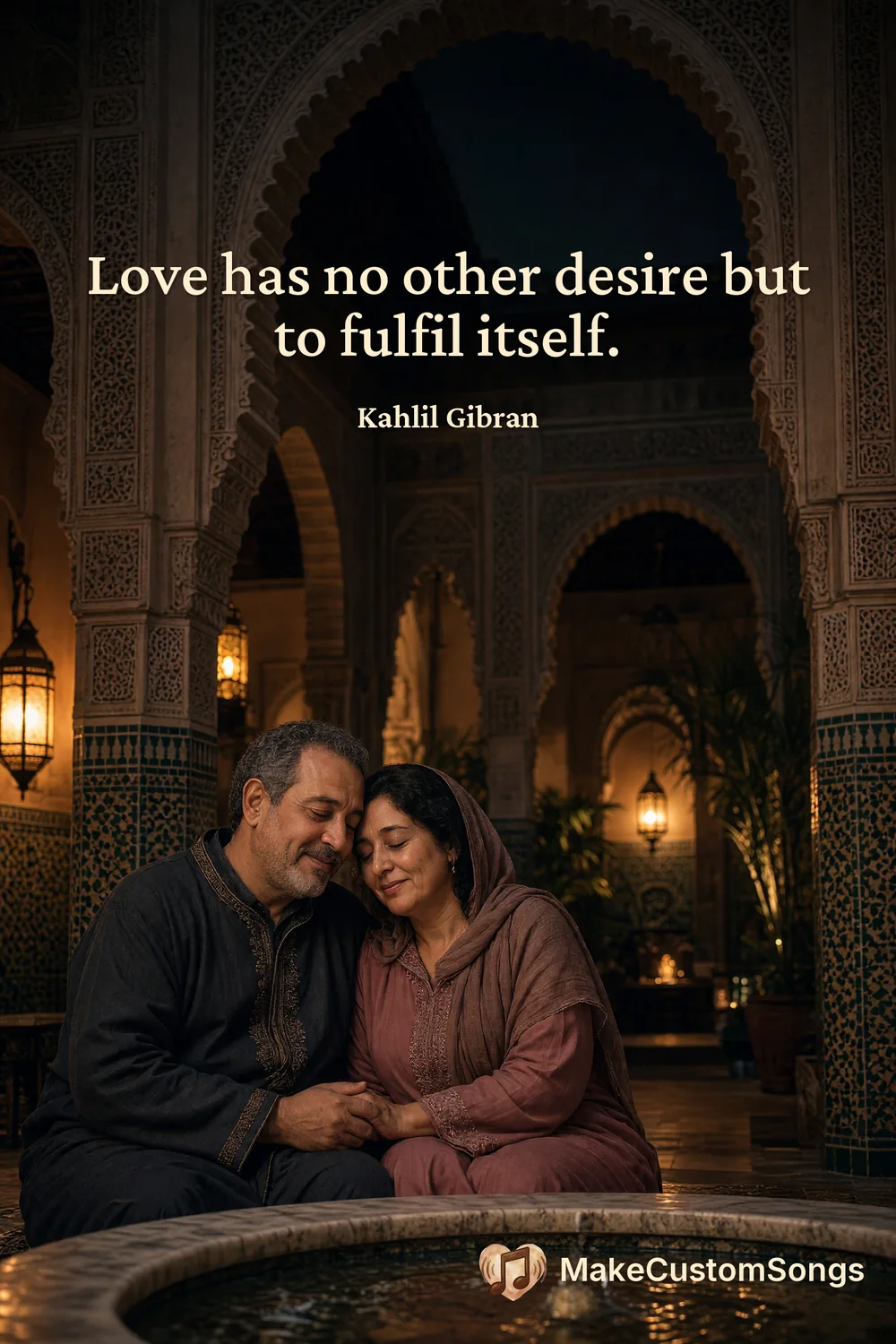
“Love has no other desire but to fulfil itself.” — Kahlil Gibran
From the chapter on love in The Prophet, just after the line that you cannot direct the course of love, because love, if it finds you worthy, directs yours.
Source: The Prophet — On Love, before the list of a lover's desires
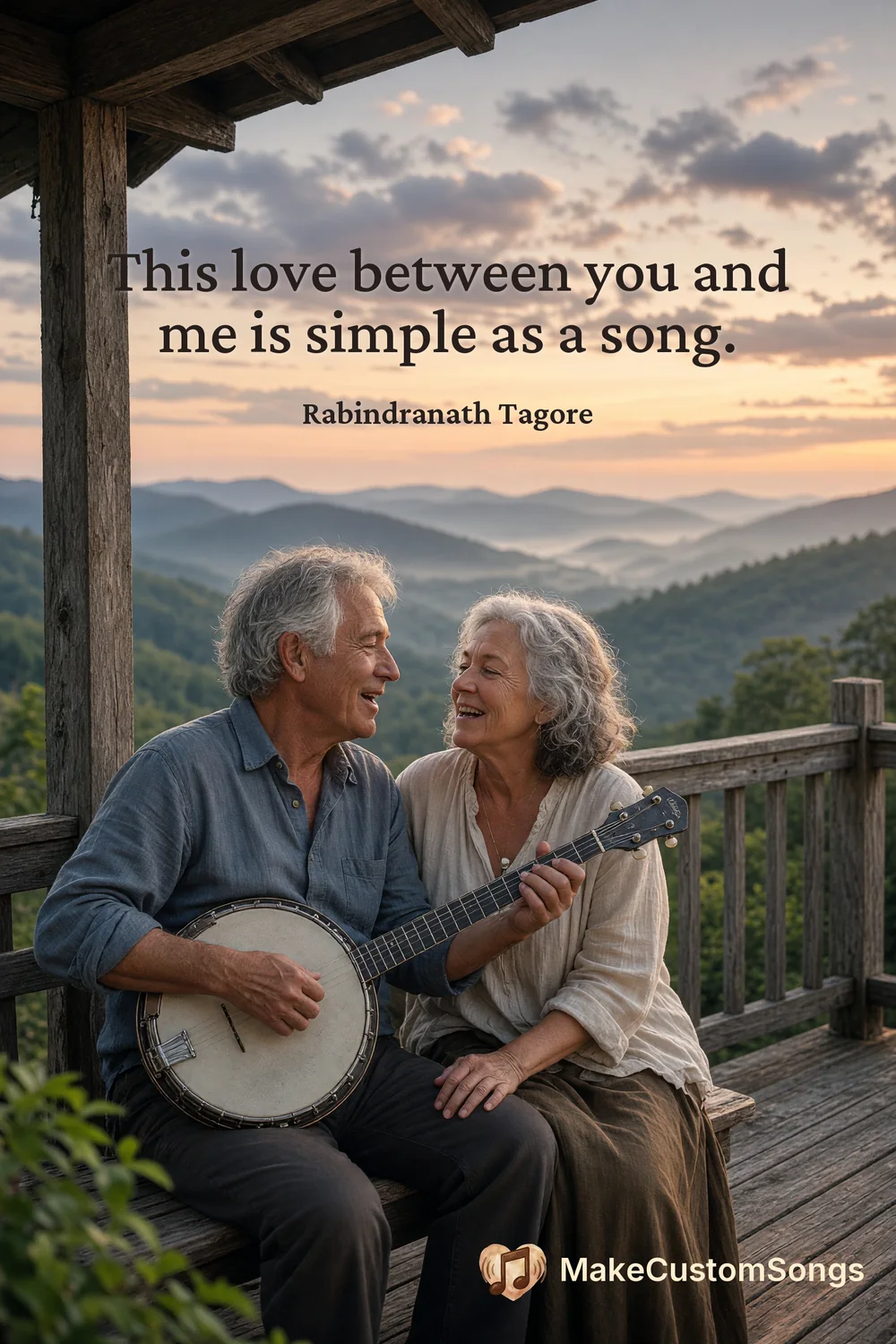
“This love between you and me is simple as a song.” — Rabindranath Tagore
The refrain of a poem set on a moonlit March night, with henna in the air, a flute lying neglected on the ground, and a garland of flowers left unfinished.
Source: The Gardener — Poem 16, recurring refrain
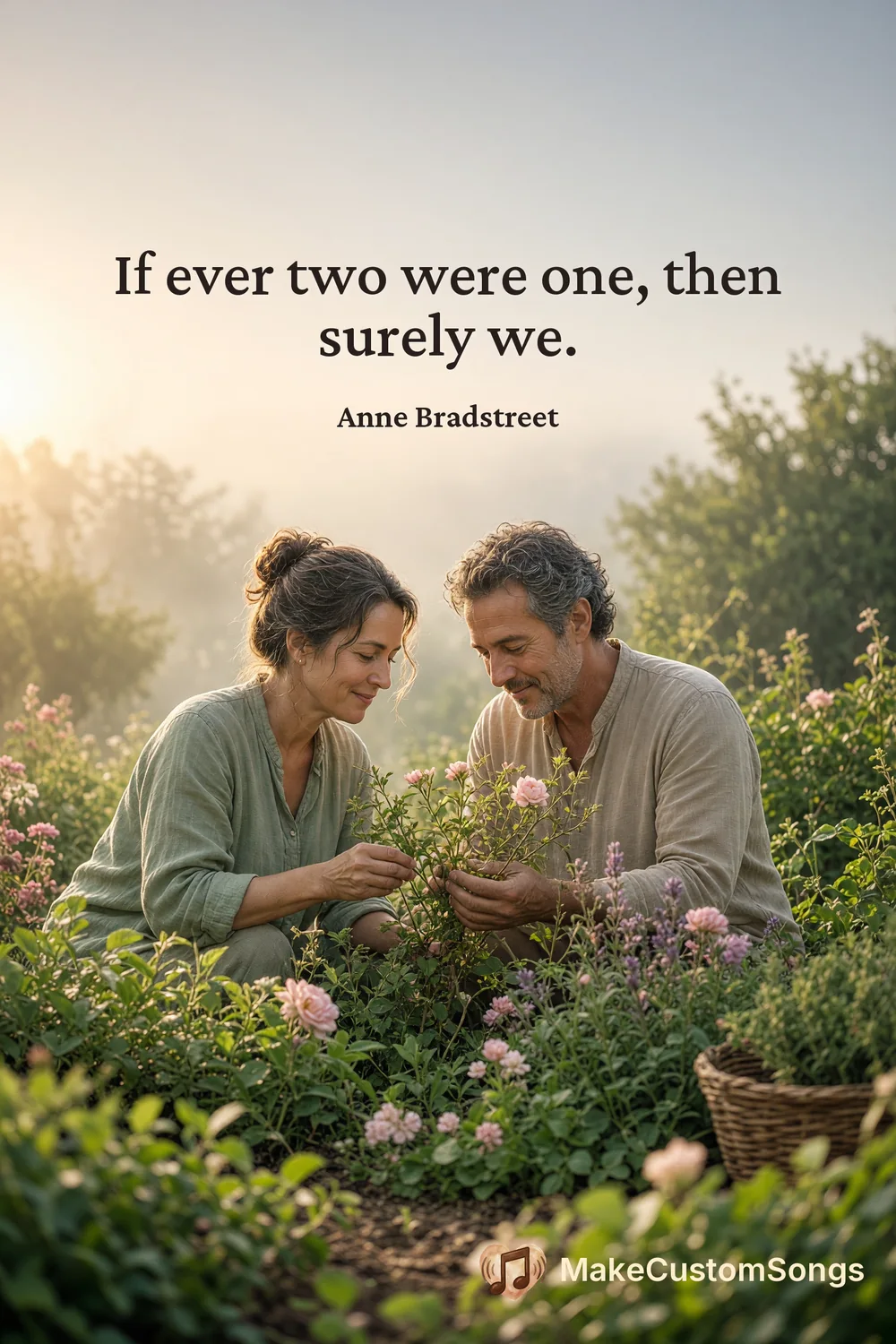
“If ever two were one, then surely we.” — Anne Bradstreet
The first line of a poem Bradstreet addressed to her own husband, Simon, in colonial Massachusetts; it was published after her death.
Source: To My Dear and Loving Husband — Line 1
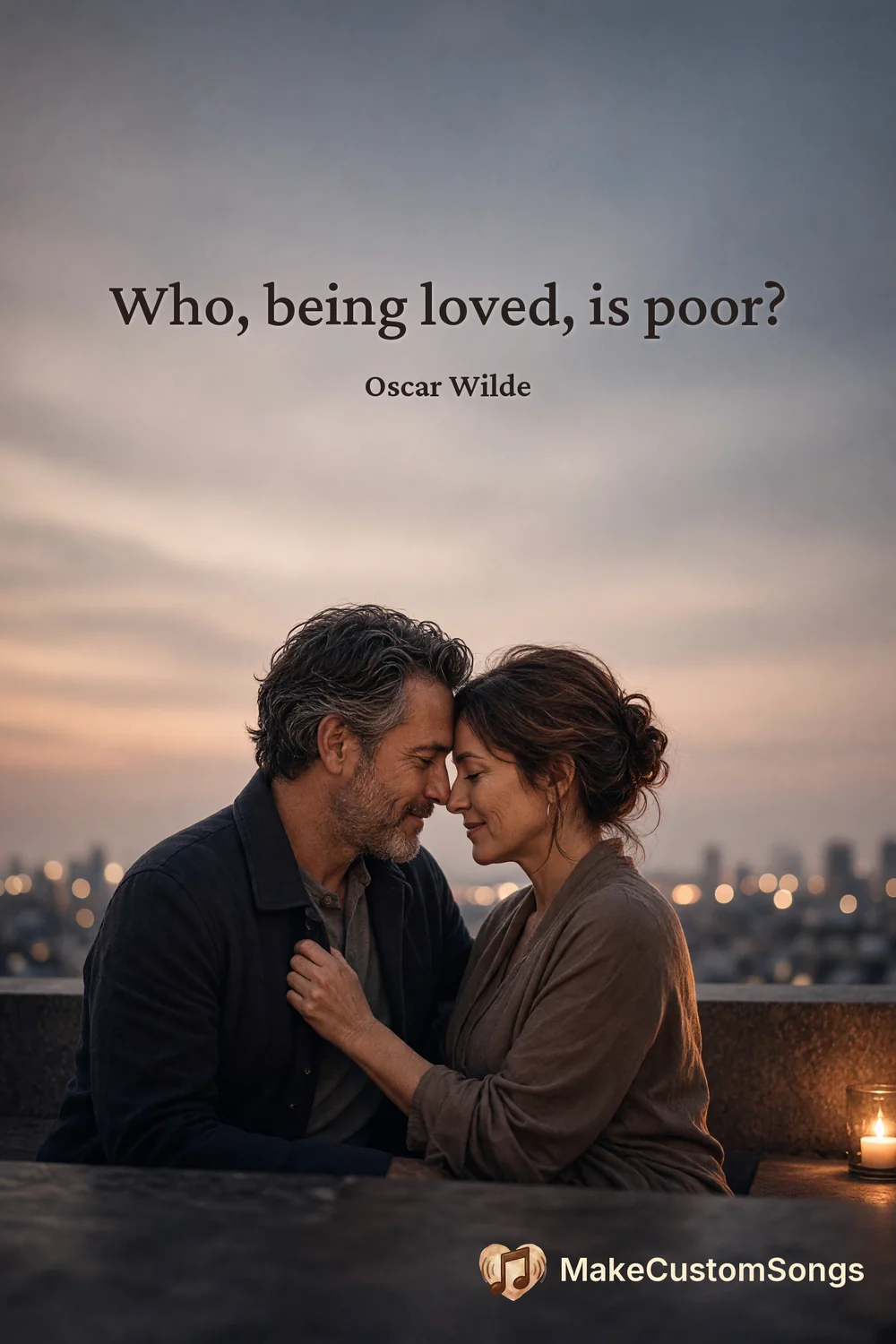
“Who, being loved, is poor?” — Oscar Wilde
Hester, an heiress, says this to the mother of the man she loves, who has just objected that they are very poor; Hester answers that she hates her riches and wants him to share them.
Source: A Woman of No Importance — Act IV, Hester to Mrs Arbuthnot
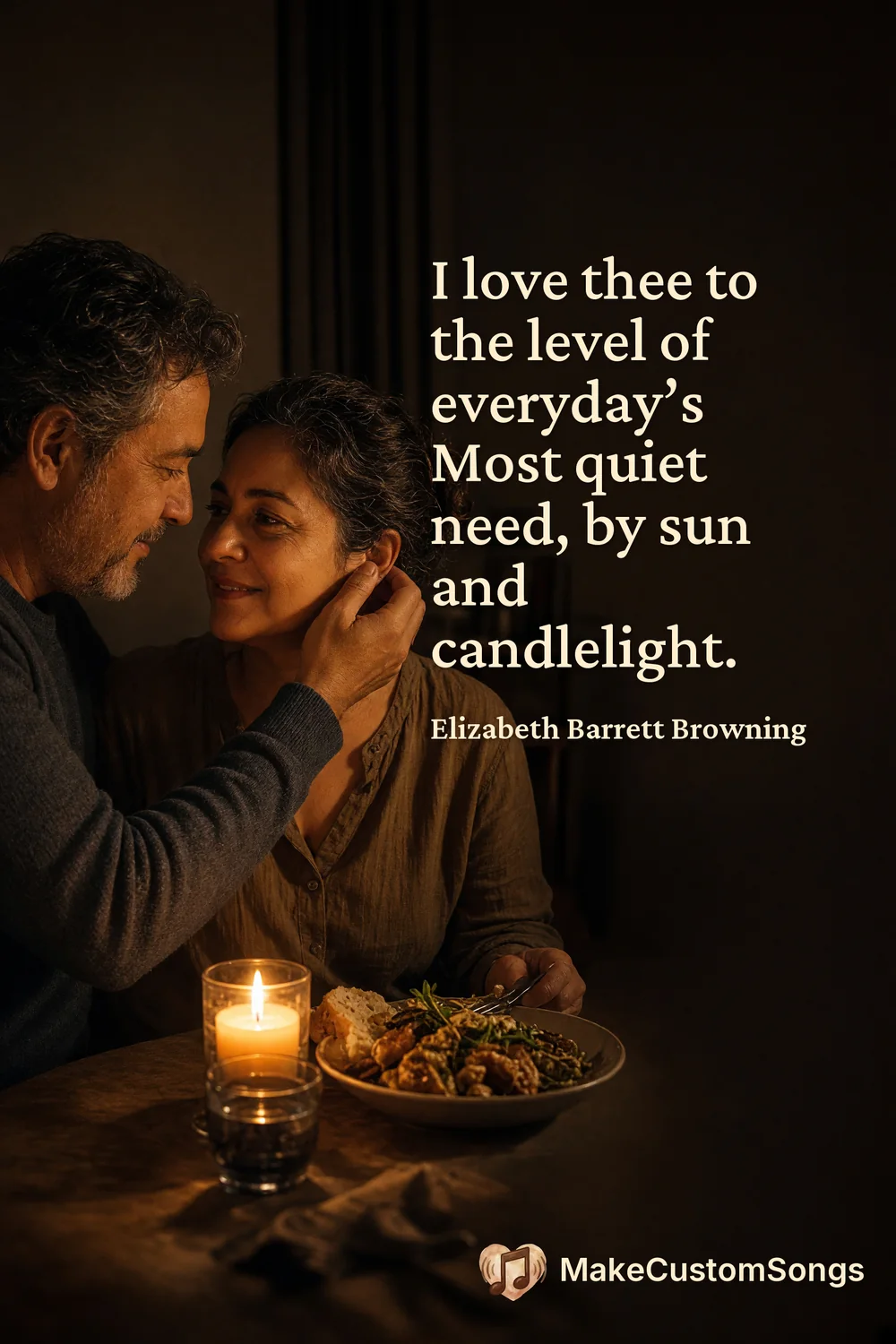
“I love thee to the level of everyday’s
Most quiet need, by sun and candlelight.” — Elizabeth Barrett Browning
From the same sonnet as How do I love thee; after reaching for the depth and breadth and height her soul can reach, she comes back down to the everyday.
Source: Sonnets from the Portuguese — Sonnet XLIII (43), lines 5–6
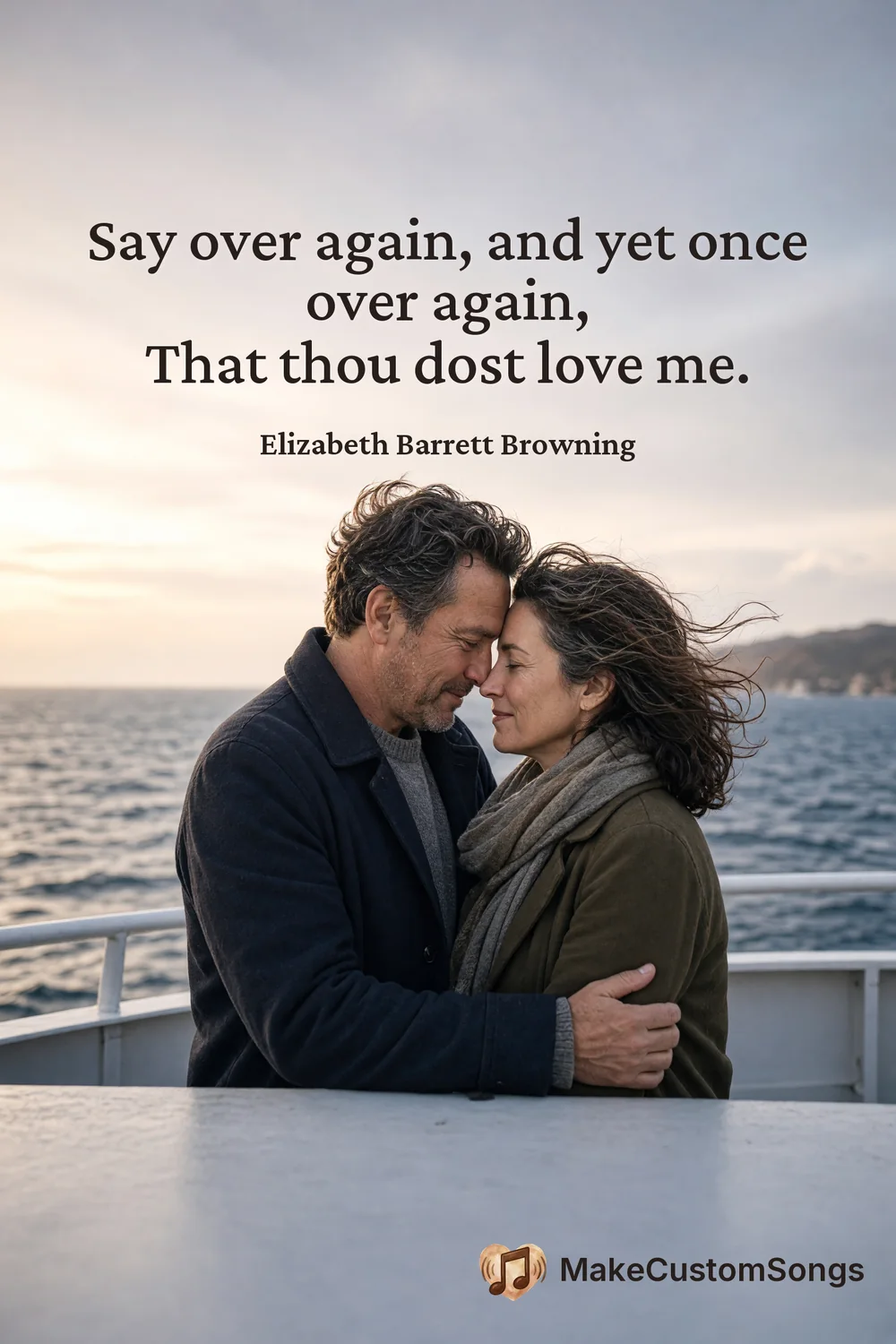
“Say over again, and yet once over again,
That thou dost love me.” — Elizabeth Barrett Browning
The sonnet asks him to keep saying it even if the repetition sounds like a cuckoo's song, because spring never comes to hill or valley without one.
Source: Sonnets from the Portuguese — Sonnet XXI (21), opening sentence
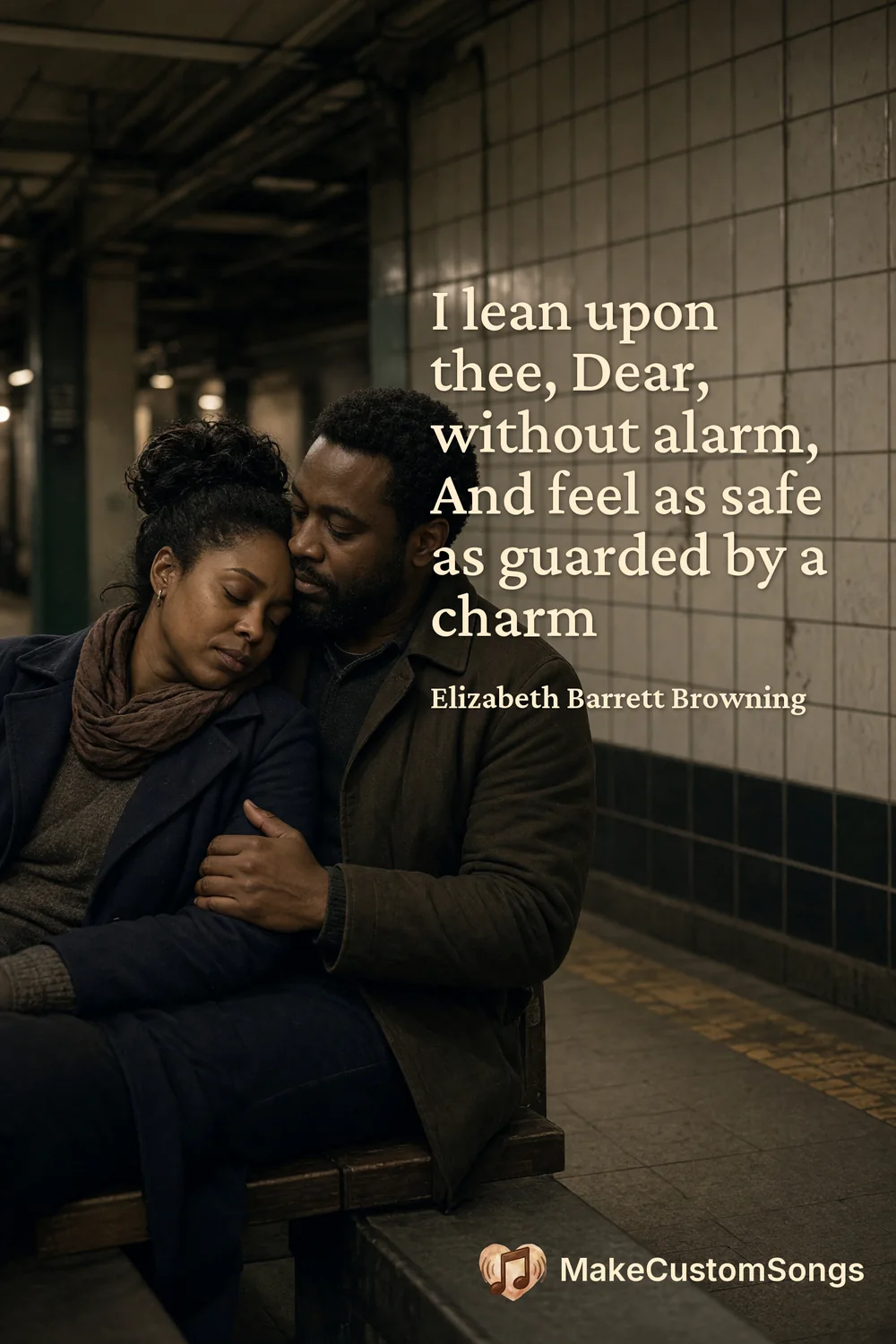
“I lean upon thee, Dear, without alarm,
And feel as safe as guarded by a charm” — Elizabeth Barrett Browning
Once the door has clicked shut on the world's noise, the sonnet says, she can lean on him and feel guarded against anyone who would do them harm.
Source: Sonnets from the Portuguese — Sonnet XXIV (24), lines 6–7
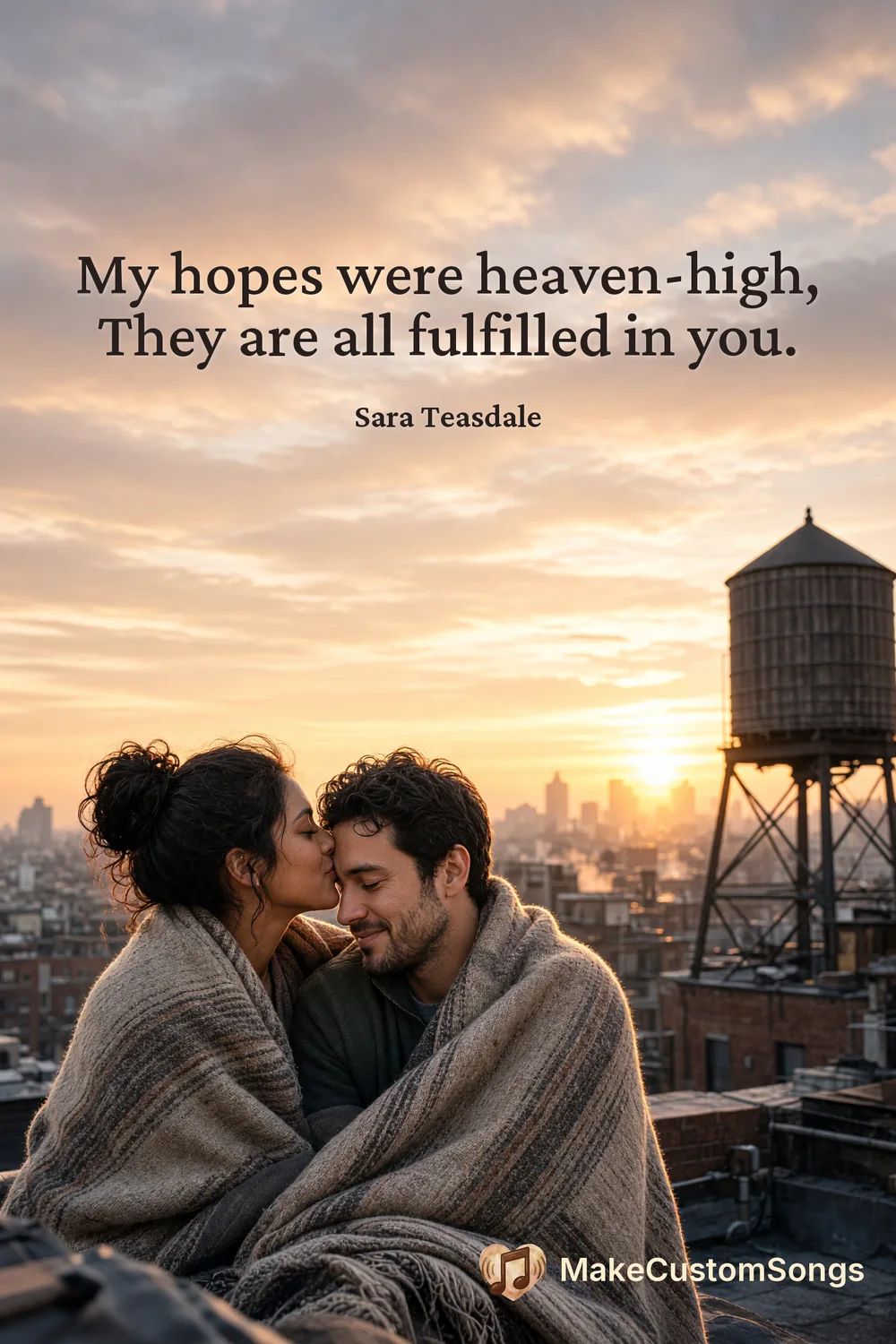
“My hopes were heaven-high,
They are all fulfilled in you.” — Sara Teasdale
The speaker compares herself to a still pool of blue that worships the sky above it, in a poem about a love that will not ebb like the sea.
Source: Love Songs — Peace, second stanza, last two lines
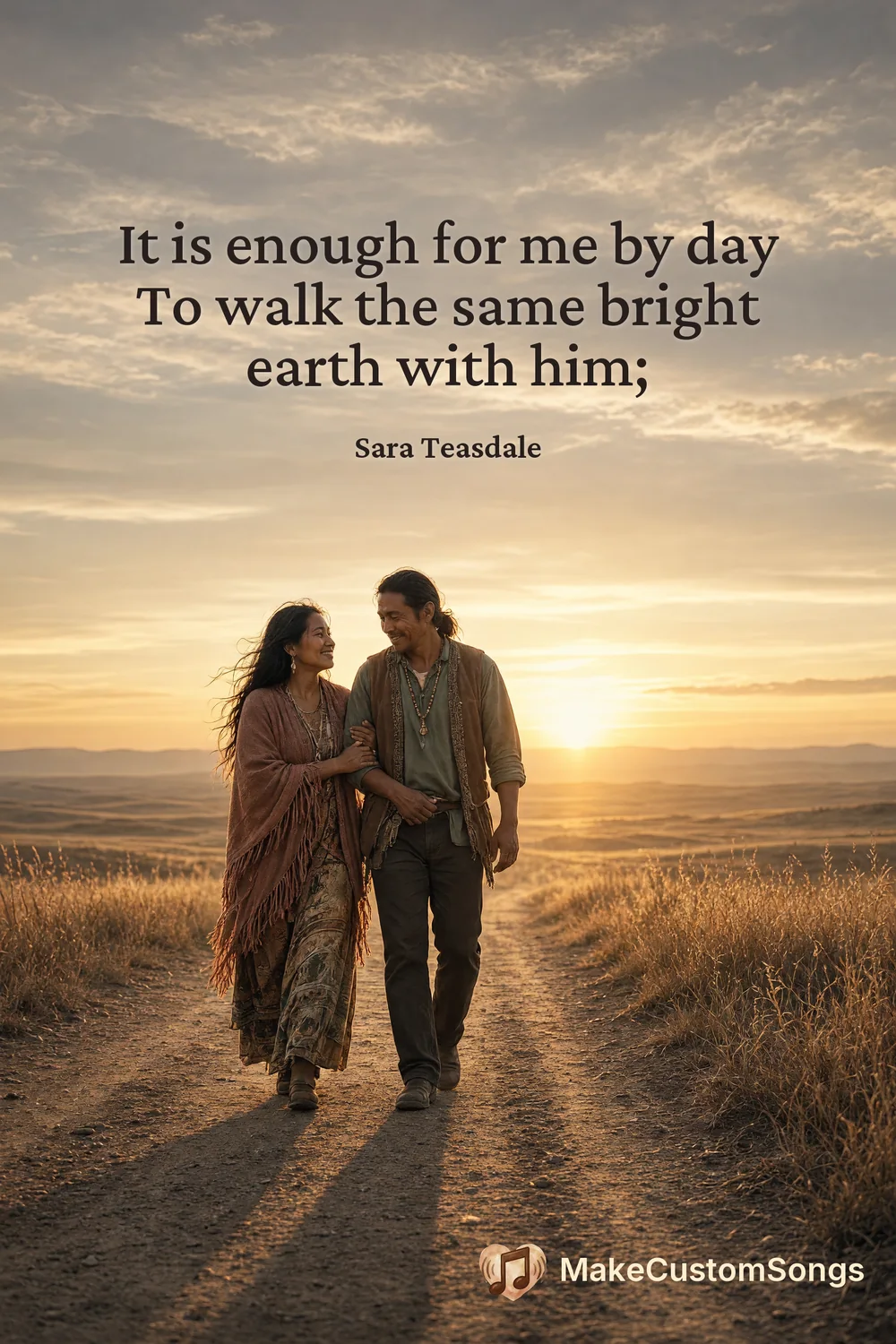
“It is enough for me by day
To walk the same bright earth with him;” — Sara Teasdale
The whole poem is a list of what is enough: the same earth by day, the same roof of stars by night, and no wish to bind the wind or fetter the sea.
Source: Love Songs — Enough, opening two lines
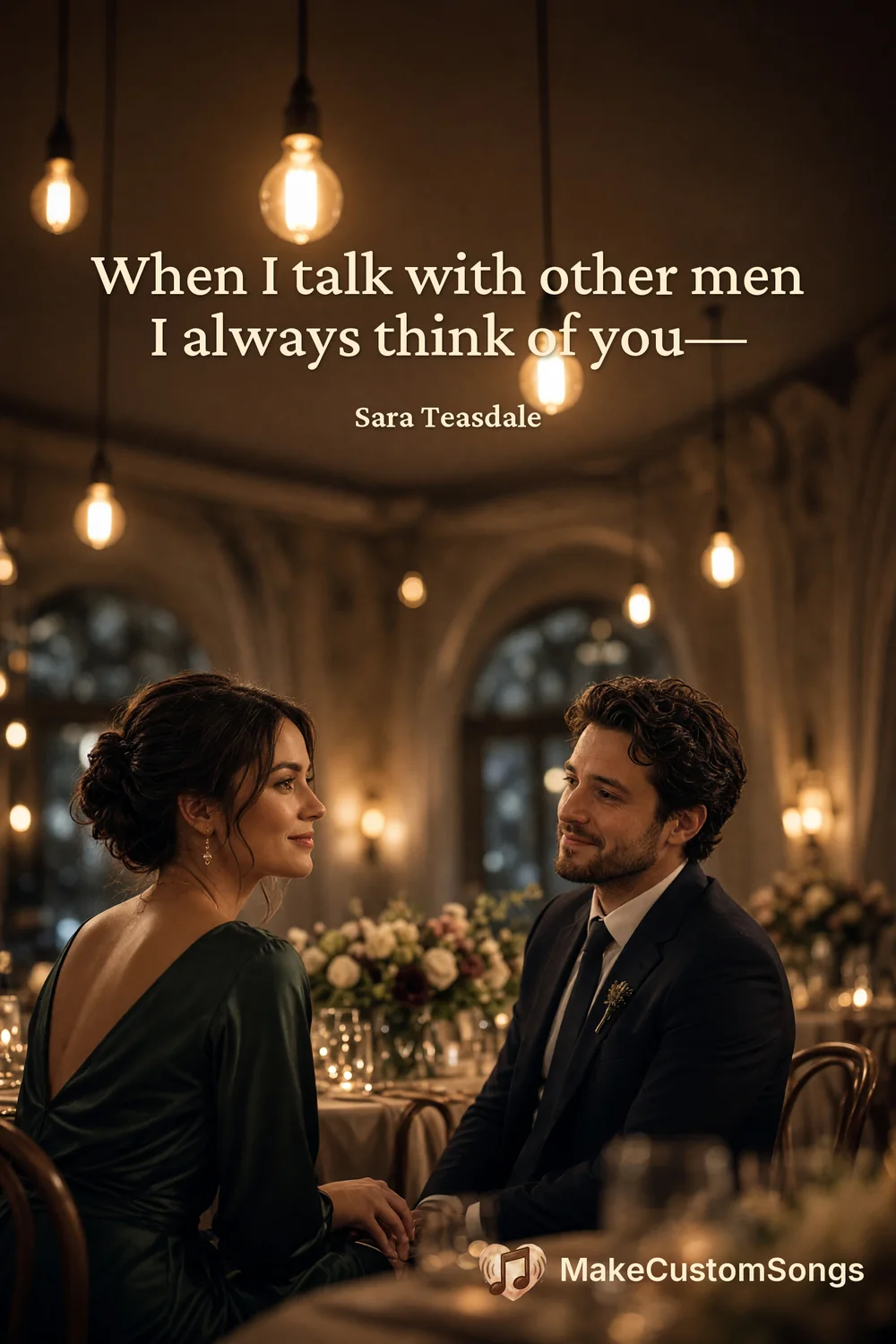
“When I talk with other men
I always think of you—” — Sara Teasdale
The poem goes on that his words are keener than other men's and gentler too, and that when she looks at other men she wishes his face were there instead.
Source: Love Songs — Other Men, opening two lines
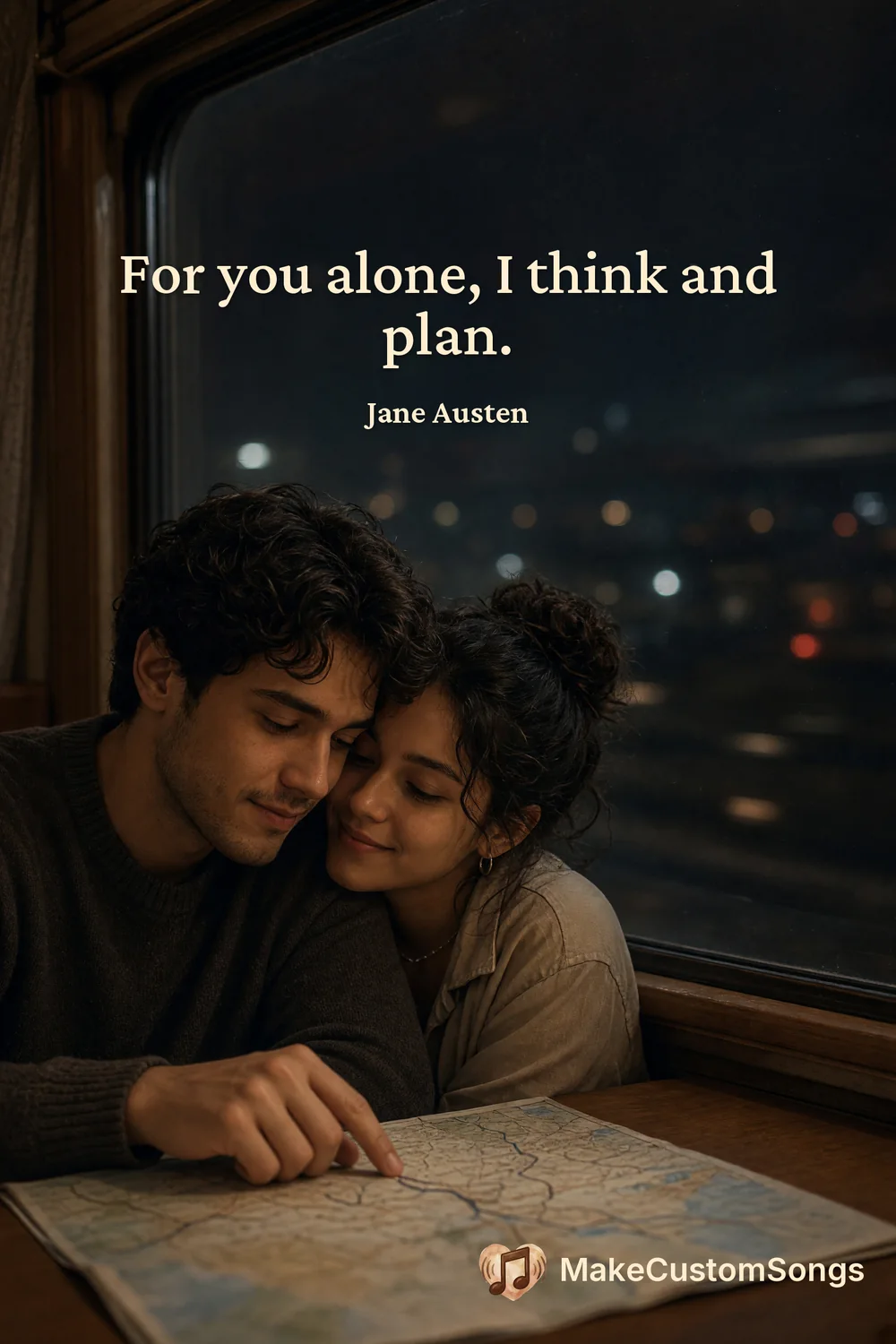
“For you alone, I think and plan.” — Jane Austen
From the same letter to Anne Elliot; the next line asks whether she can possibly have failed to see it.
Source: Persuasion — Chapter 23, Captain Wentworth's letter to Anne Elliot
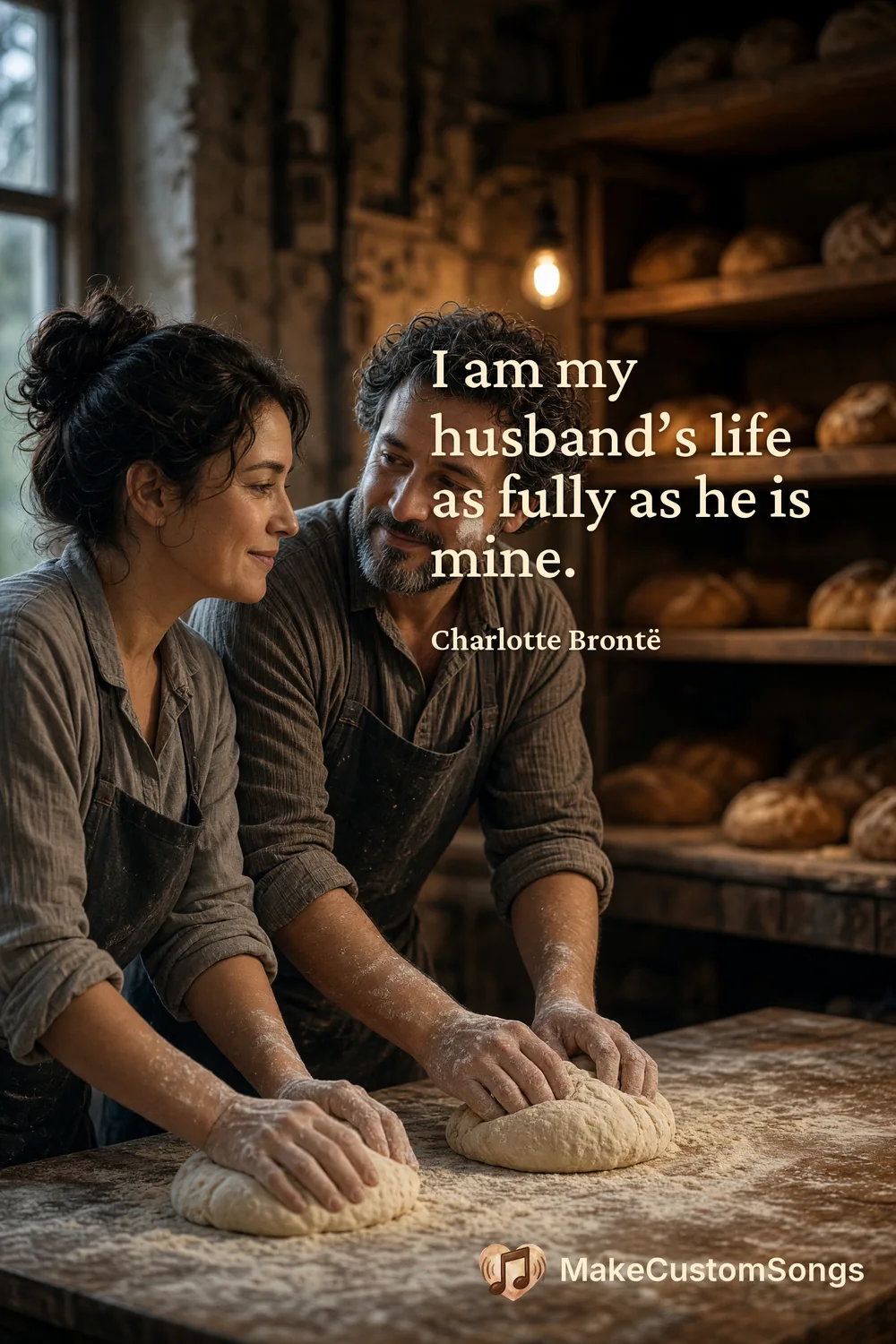
“I am my husband’s life as fully as he is mine.” — Charlotte Brontë
Jane, ten years into her marriage, says she holds herself blest beyond what language can express; the chapter opens with Reader, I married him.
Source: Jane Eyre — Chapter 38, Jane's account of her marriage
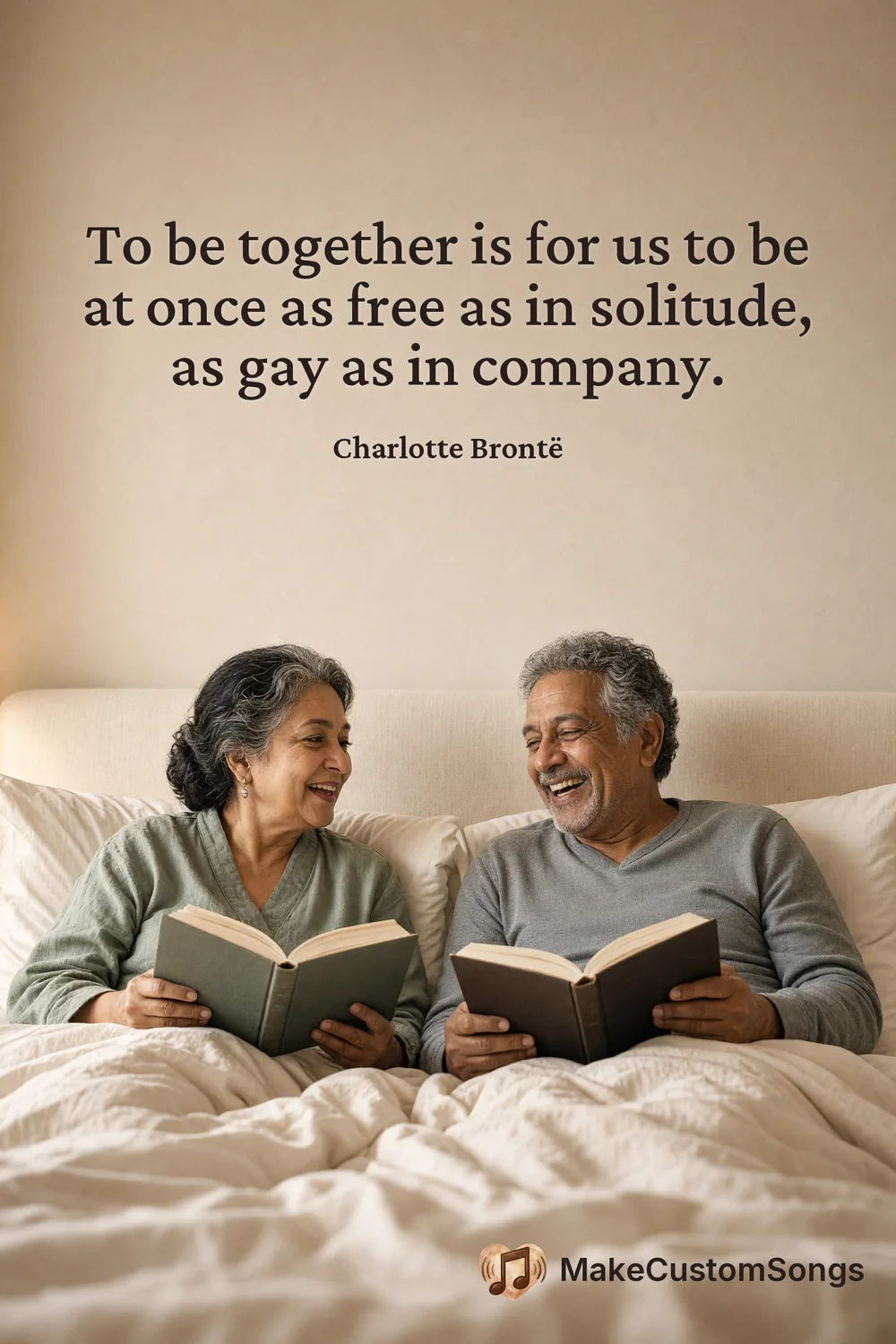
“To be together is for us to be at once as free as in solitude, as gay as in company.” — Charlotte Brontë
Jane's account of married life with Rochester: they talk all day long, she says, and talking to each other is only audible thinking.
Source: Jane Eyre — Chapter 38, Jane's account of companionship

“I would not wish
Any companion in the world but you;” — William Shakespeare
Miranda, who has seen almost no one but her father in her whole life, says this to Ferdinand, then catches herself for prattling too wildly.
Source: The Tempest — Act III, scene I, Miranda to Ferdinand
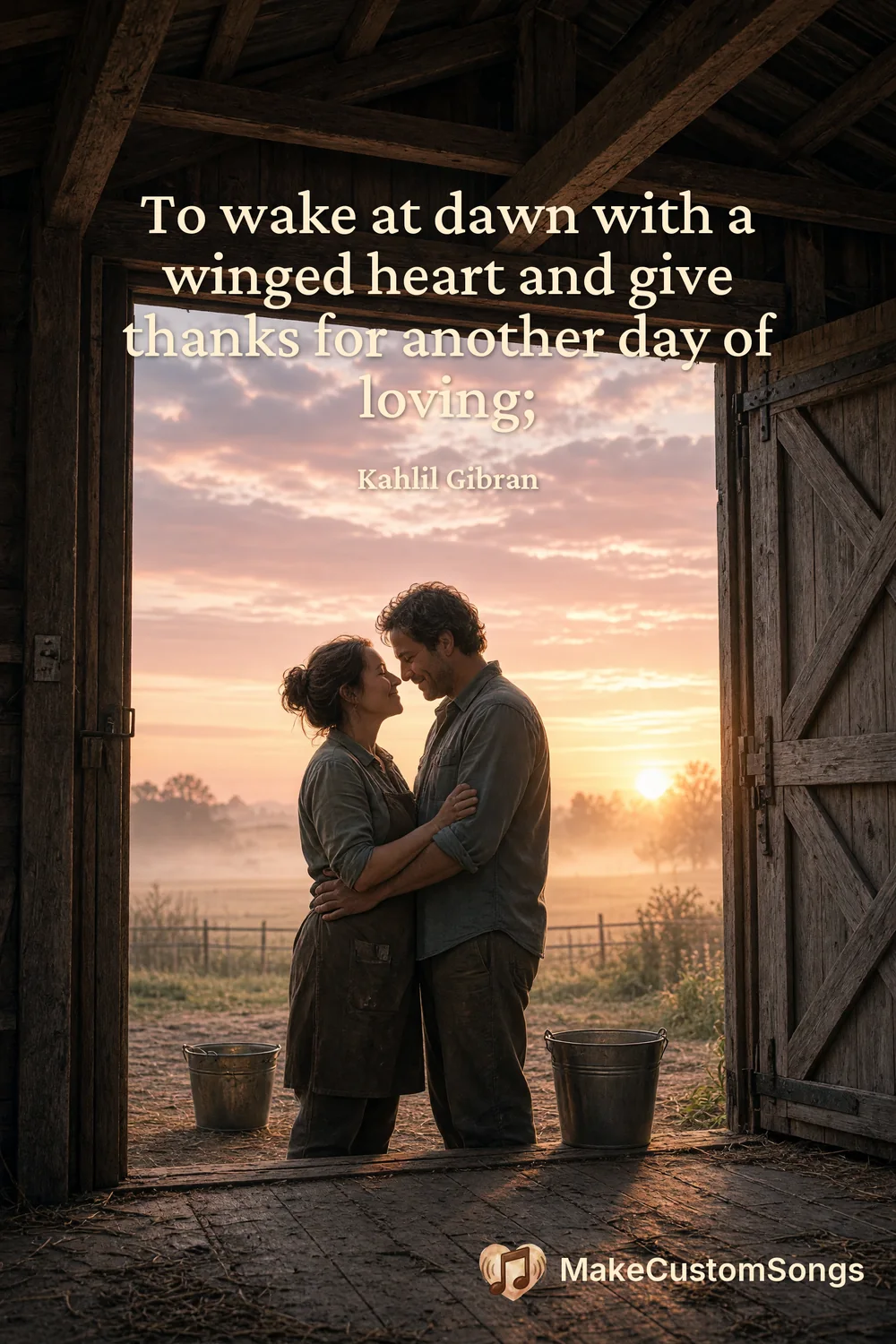
“To wake at dawn with a winged heart and give thanks for another day of loving;” — Kahlil Gibran
One of the desires The Prophet lists for lovers, placed between bleeding willingly and joyfully and returning home at evening with gratitude.
Source: The Prophet — On Love, list of a lover's desires near the end
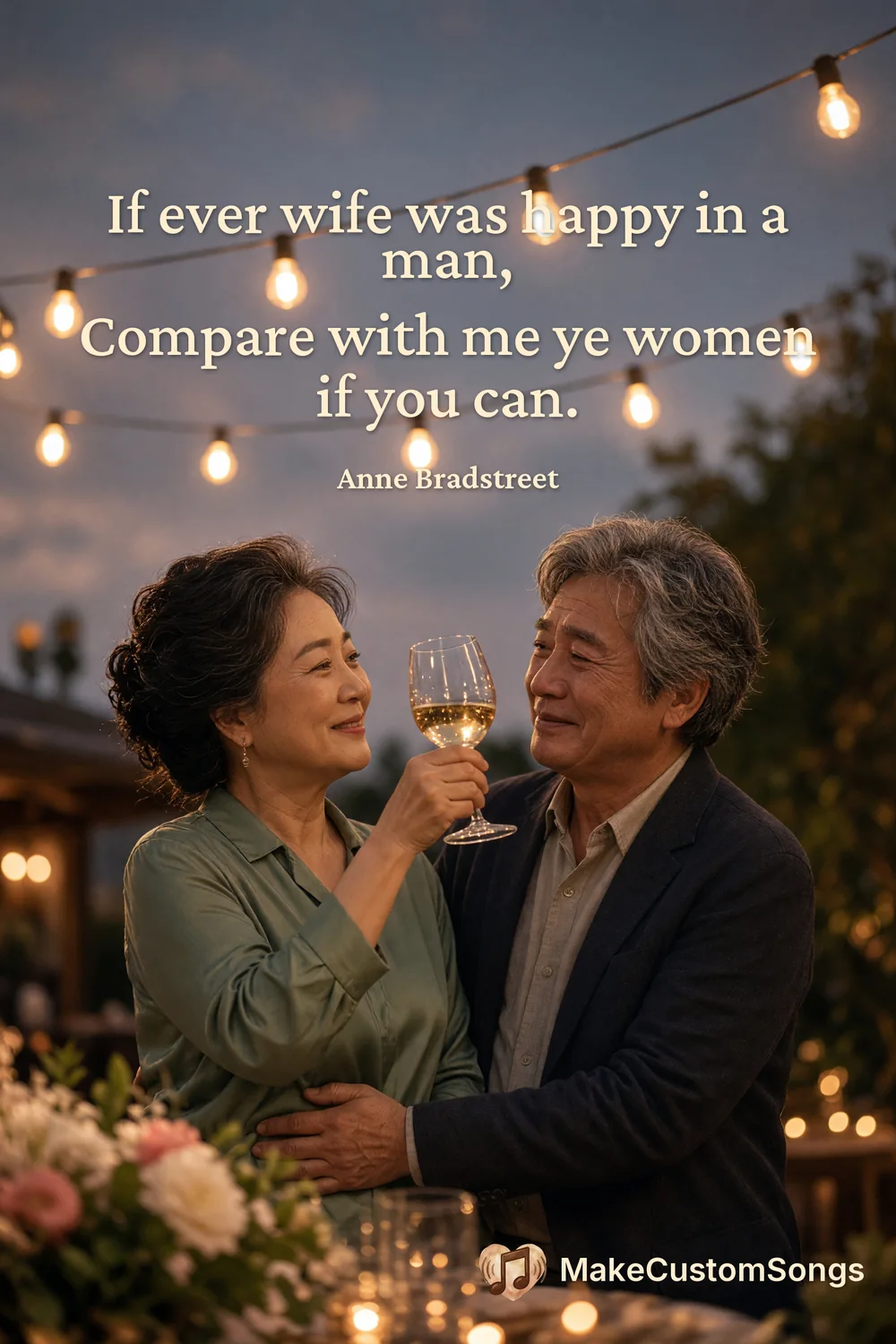
“If ever wife was happy in a man,
Compare with me ye women if you can.” — Anne Bradstreet
Bradstreet's challenge to every other wife, from the same poem to her husband.
Source: To My Dear and Loving Husband — Lines 3–4
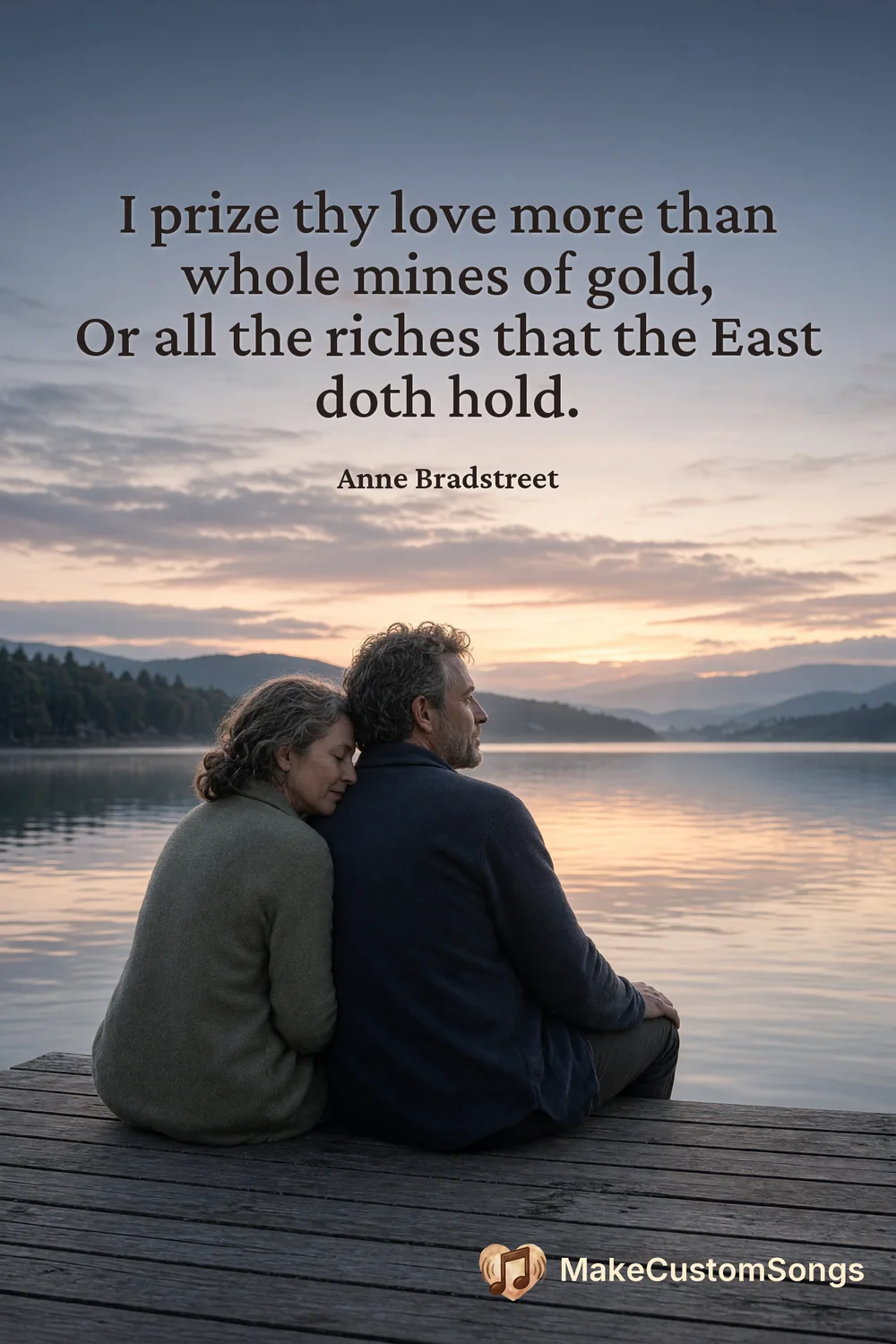
“I prize thy love more than whole mines of gold,
Or all the riches that the East doth hold.” — Anne Bradstreet
The poem goes on to say that rivers cannot quench her love, and nothing but love from him can repay it.
Source: To My Dear and Loving Husband — Lines 5–6
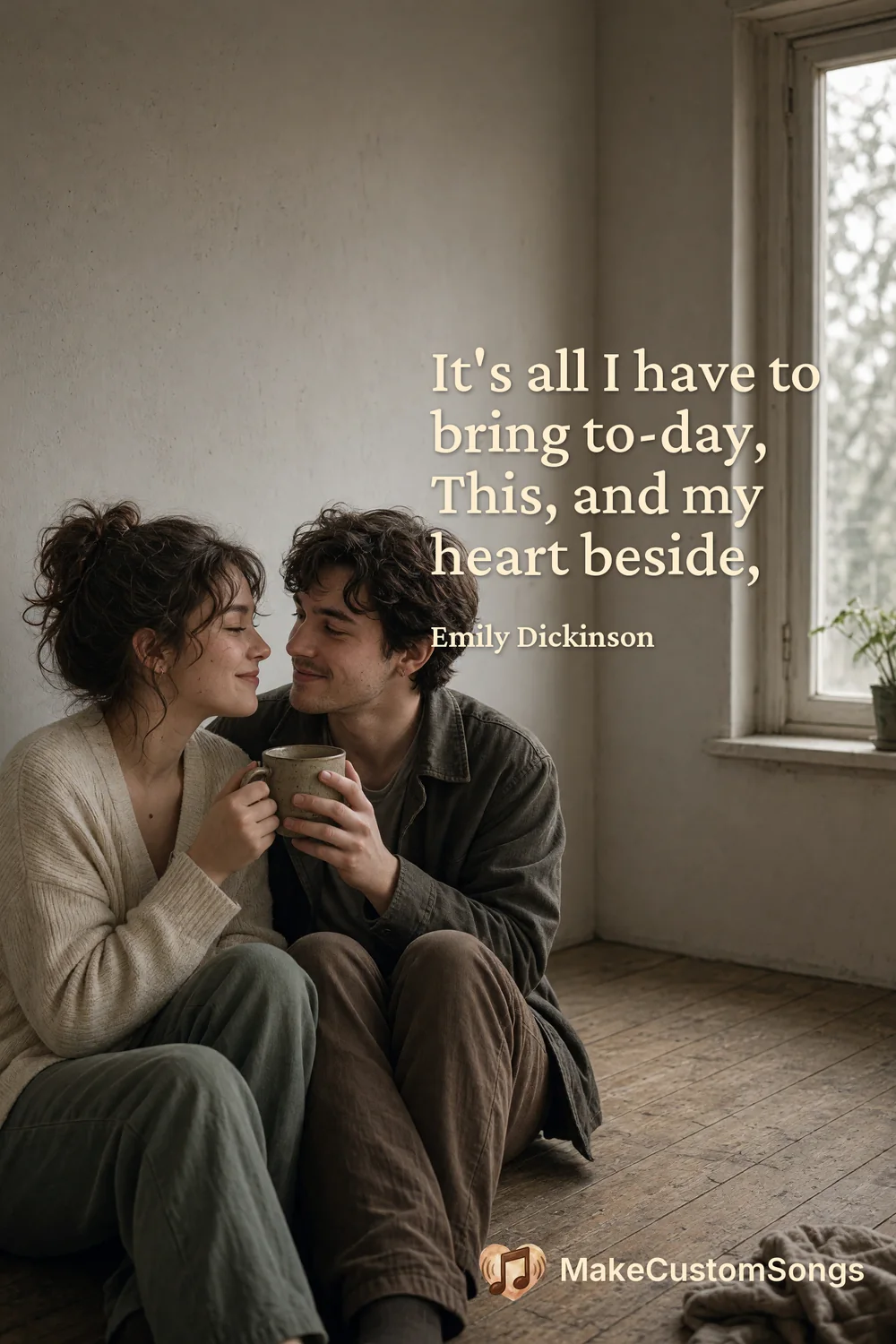
“It's all I have to bring to-day,
This, and my heart beside,” — Emily Dickinson
The poem lists what she brings: this, and her heart, and all the fields and meadows, and asks that someone count them in case she forgets.
Source: Poems by Emily Dickinson, Three Series, Complete — Third Series, opening untitled poem before the preface, lines 1–2
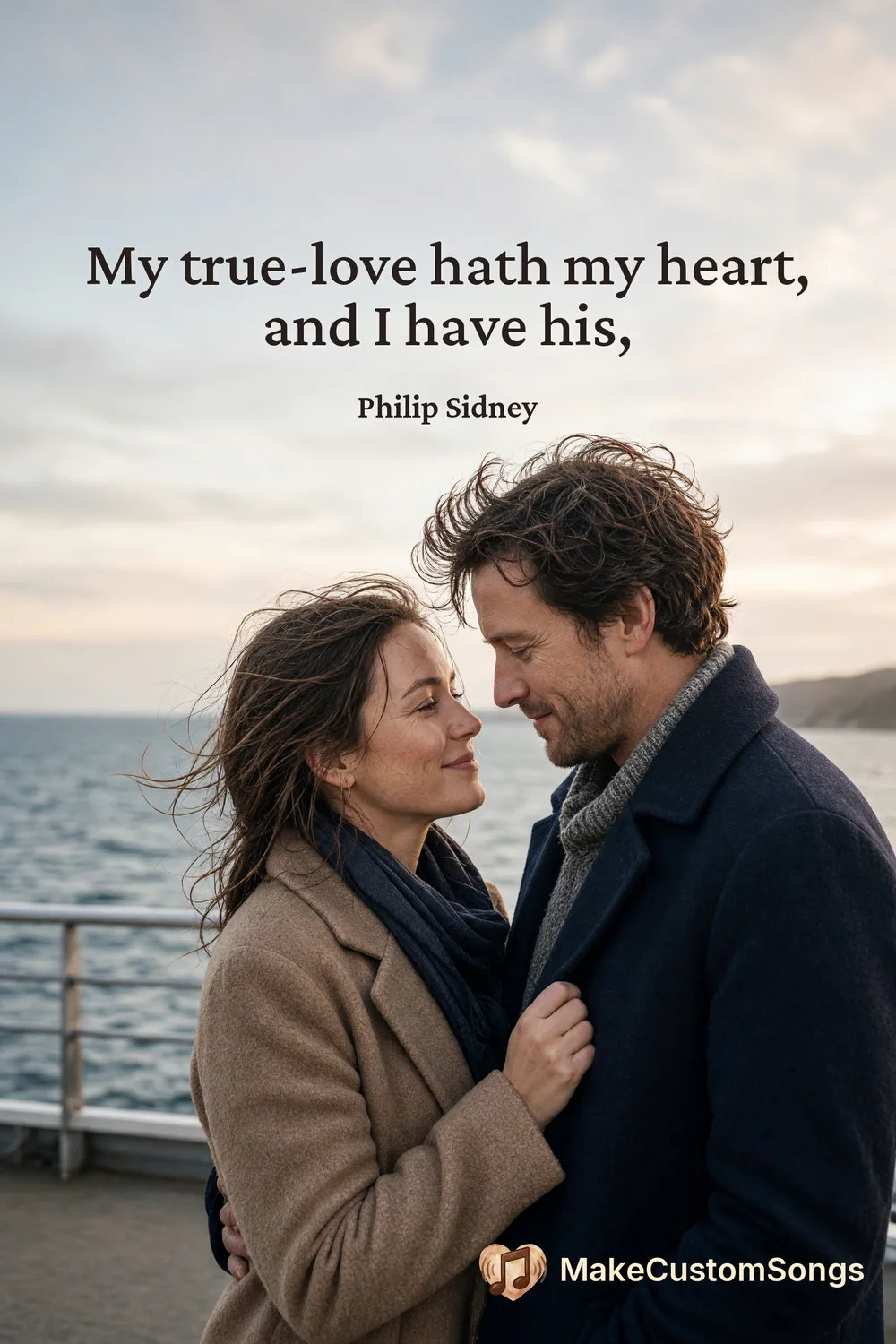
“My true-love hath my heart, and I have his,” — Philip Sidney
The next line calls it a just exchange, one heart for the other, and says there never was a better bargain driven.
Source: The Golden Treasury — Poem XXXII (32), A Ditty, opening line
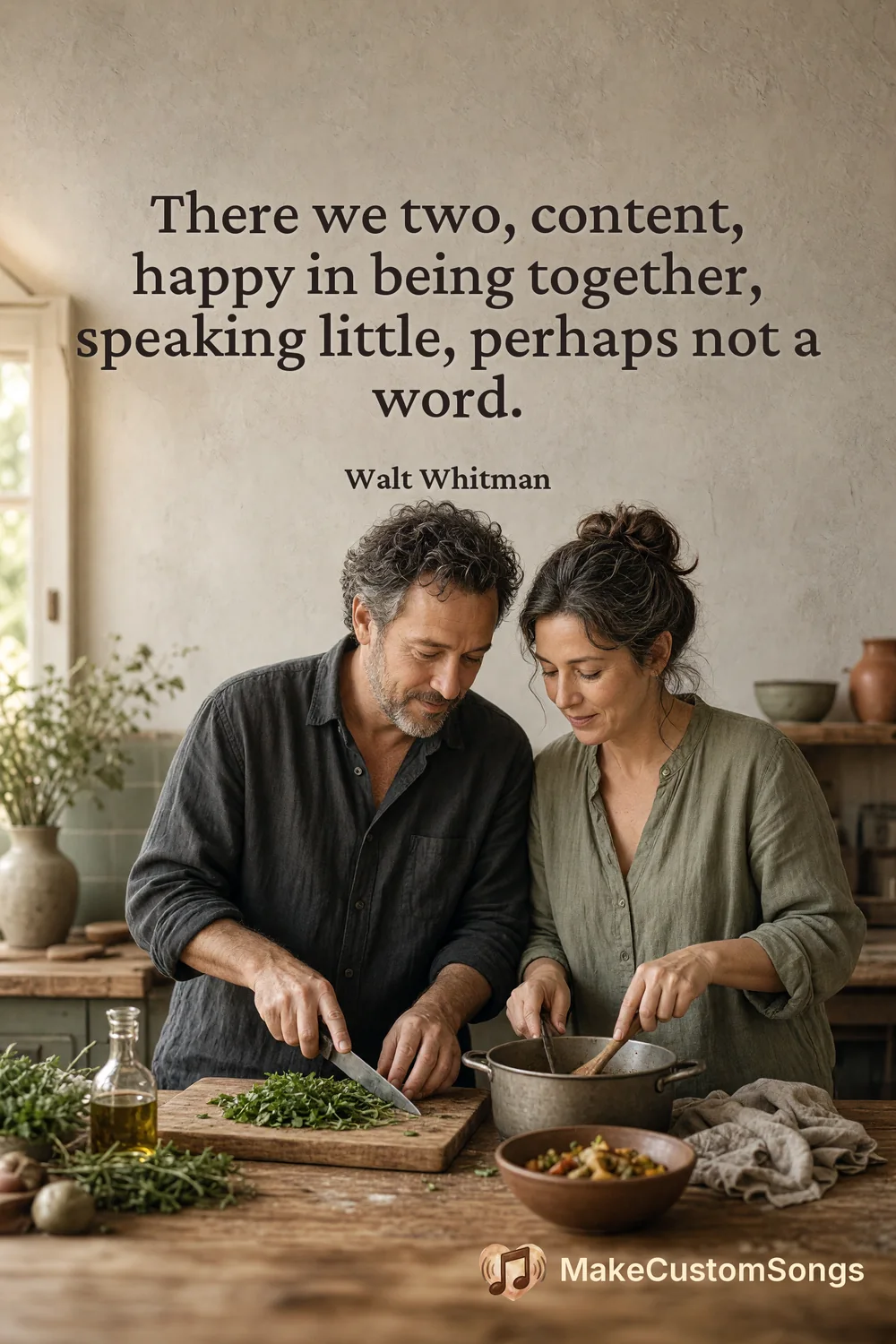
“There we two, content, happy in being together, speaking little, perhaps not a word.” — Walt Whitman
Two people in a crowded barroom, holding hands amid the noise of drinking and jokes, content to say nothing at all.
Source: Leaves of Grass — A Glimpse, final line
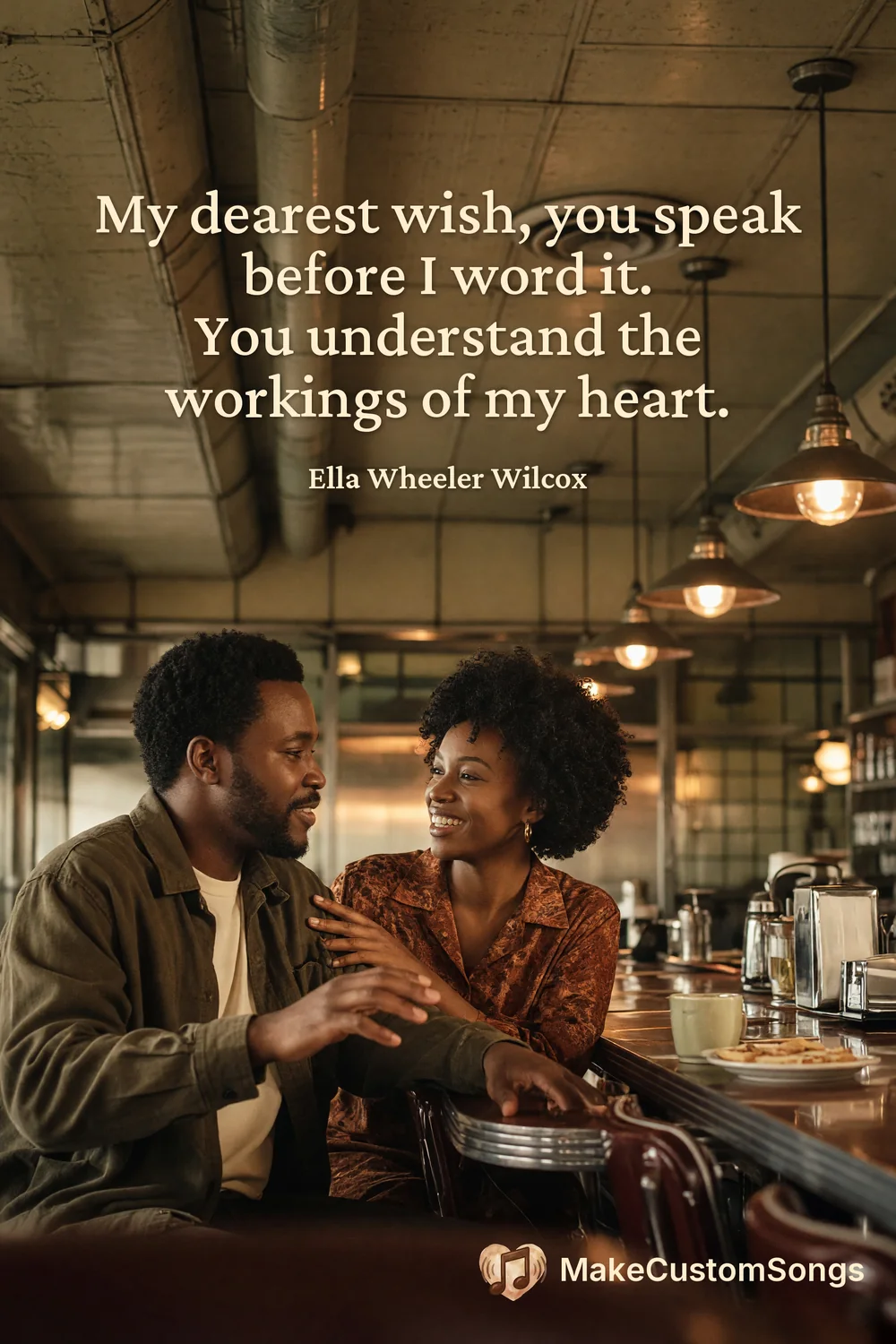
“My dearest wish, you speak before I word it.
You understand the workings of my heart.” — Ella Wheeler Wilcox
The stanza before this says that when the body is broken their spirits will still be lovers; then the poem turns to being understood before you have spoken.
Source: Poems of Love — Three-Fold, second stanza, opening two lines
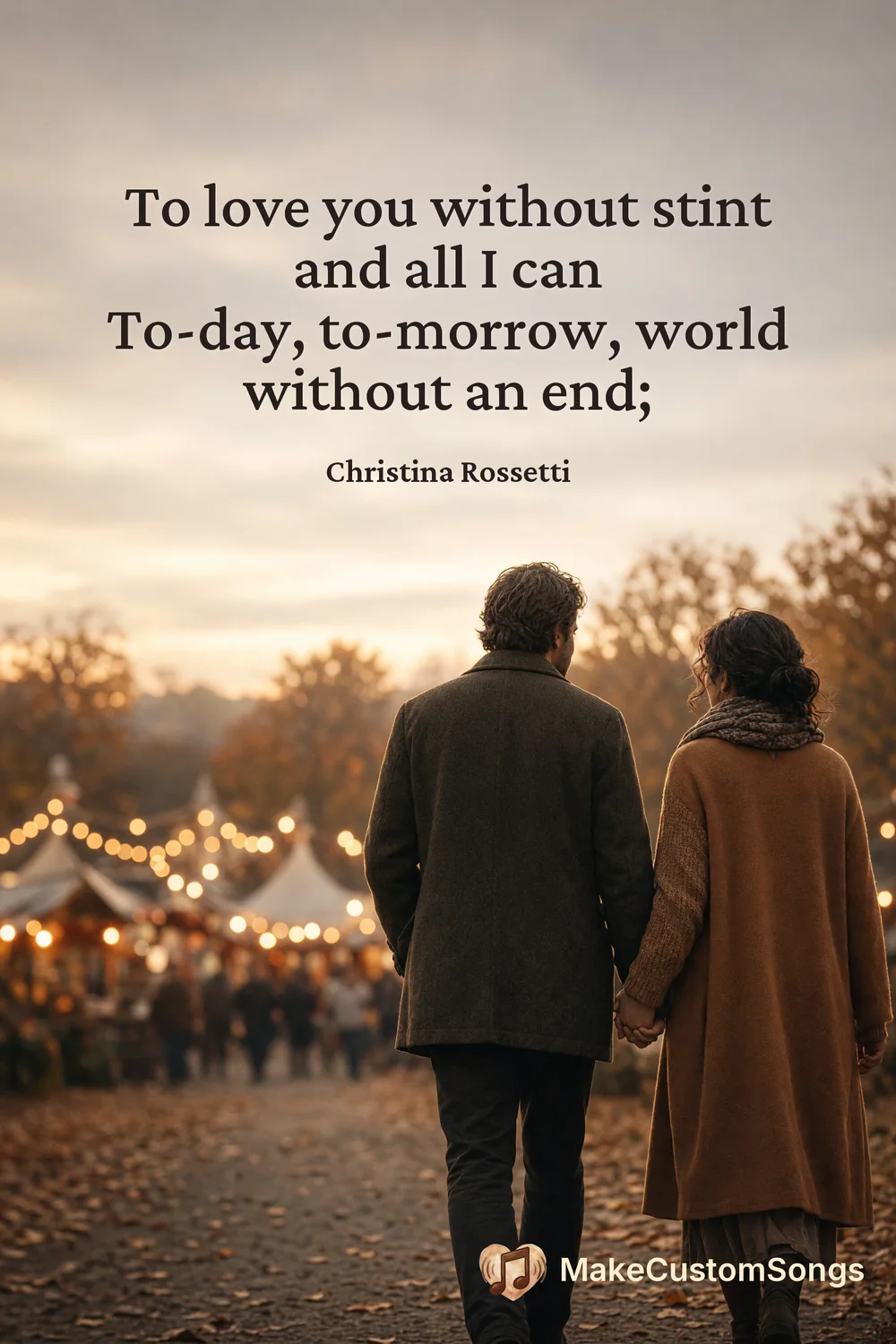
“To love you without stint and all I can
To-day, to-morrow, world without an end;” — Christina Rossetti
The sonnet has just wished him everything God would make him, then asks what is left for her, and answers: to love him without limit, today, tomorrow, and forever.
Source: Poems — Monna Innominata, sonnet 5, lines 10–11
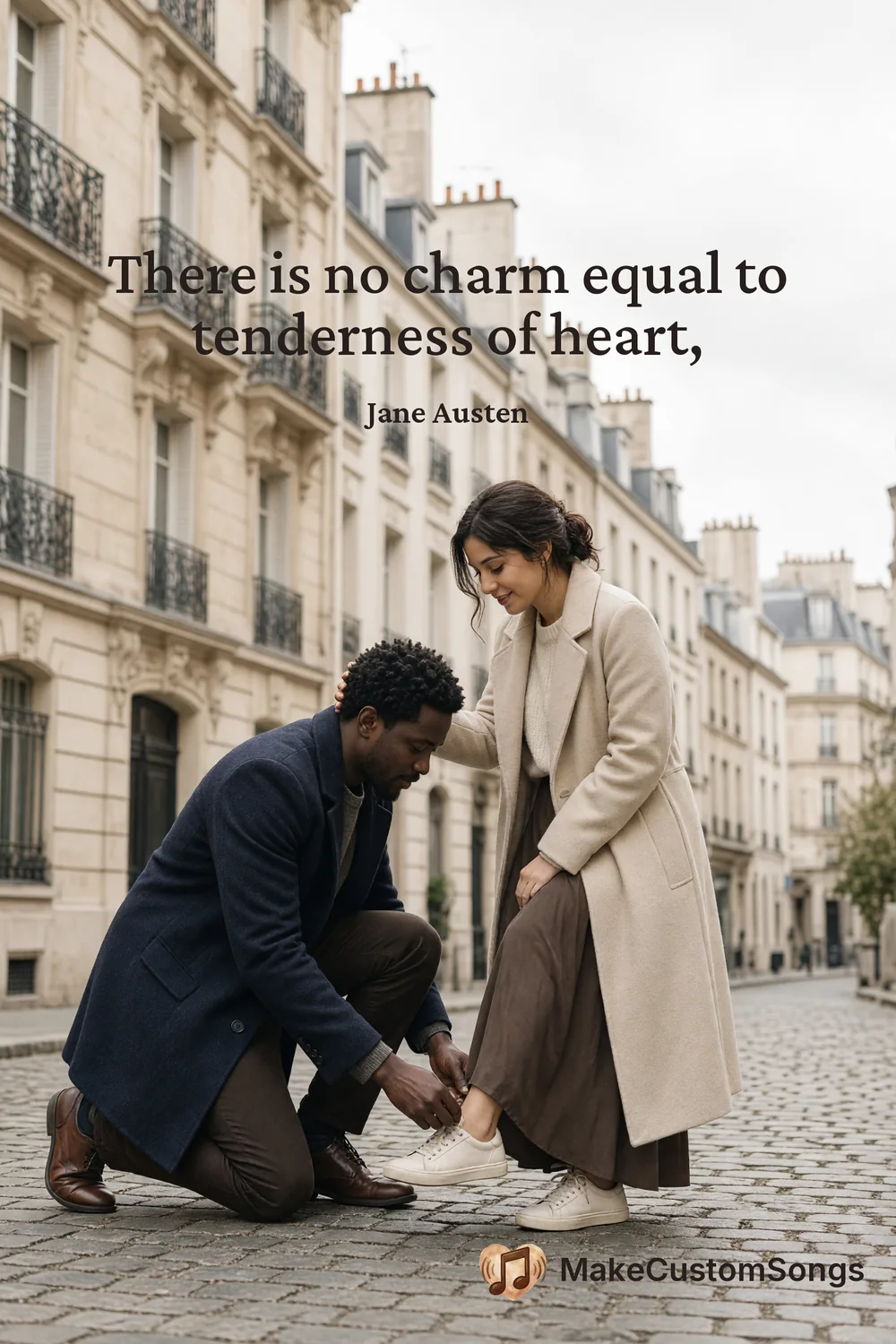
“There is no charm equal to tenderness of heart,” — Jane Austen
Emma says this to herself about her friend Harriet, not a suitor; the next sentence adds that warmth and an open manner will beat cleverness every time.
Source: Emma — Volume II, chapter XIII (continuous chapter 31), Emma's reflection on Harriet
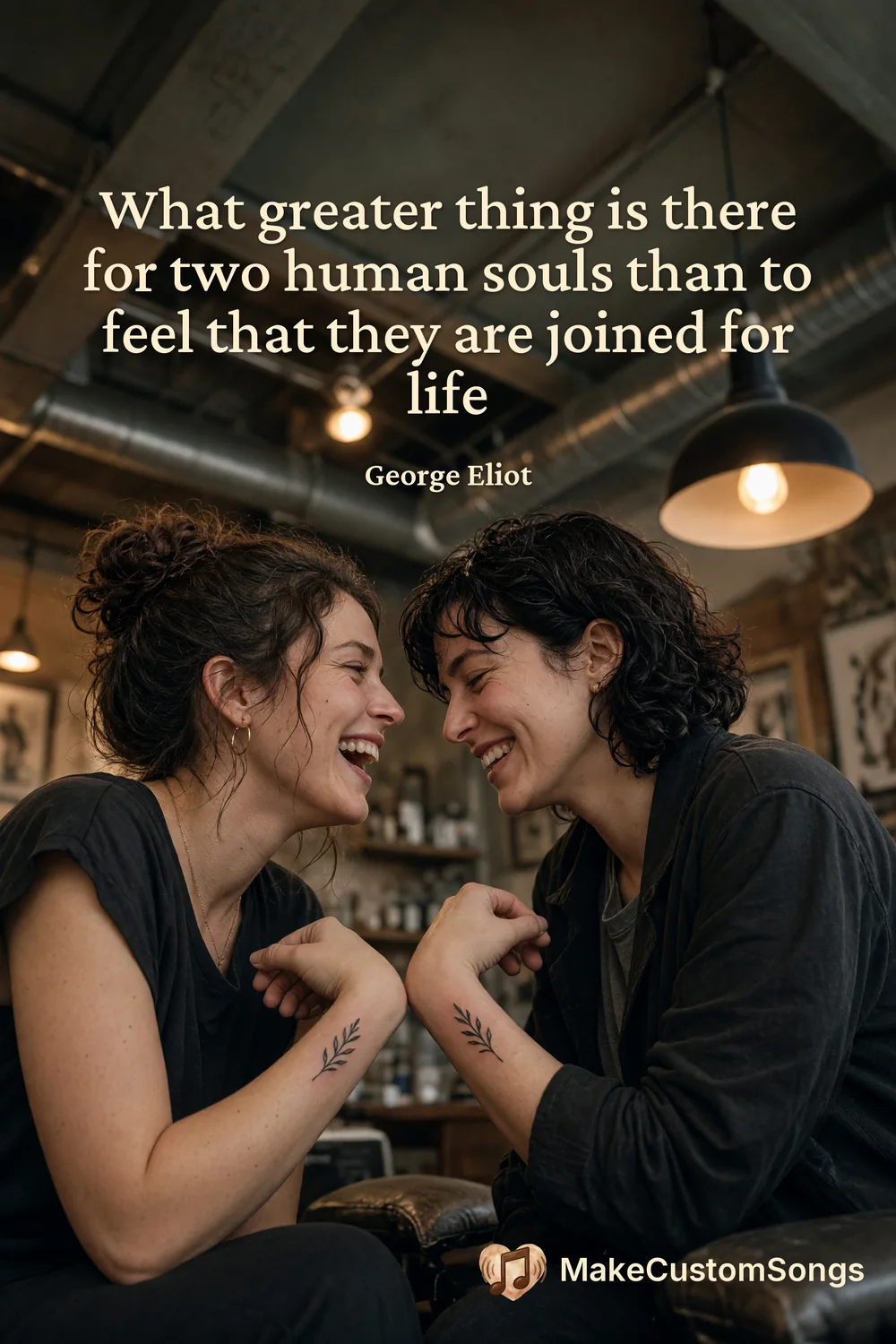
“What greater thing is there for two human souls than to feel that they are joined for life” — George Eliot
Adam and Dinah have just kissed and promised never to part till death; the sentence goes on to list strengthening each other in labour and resting on each other in sorrow.
Source: Adam Bede — Chapter LIV (54), The Meeting on the Hill, final paragraph
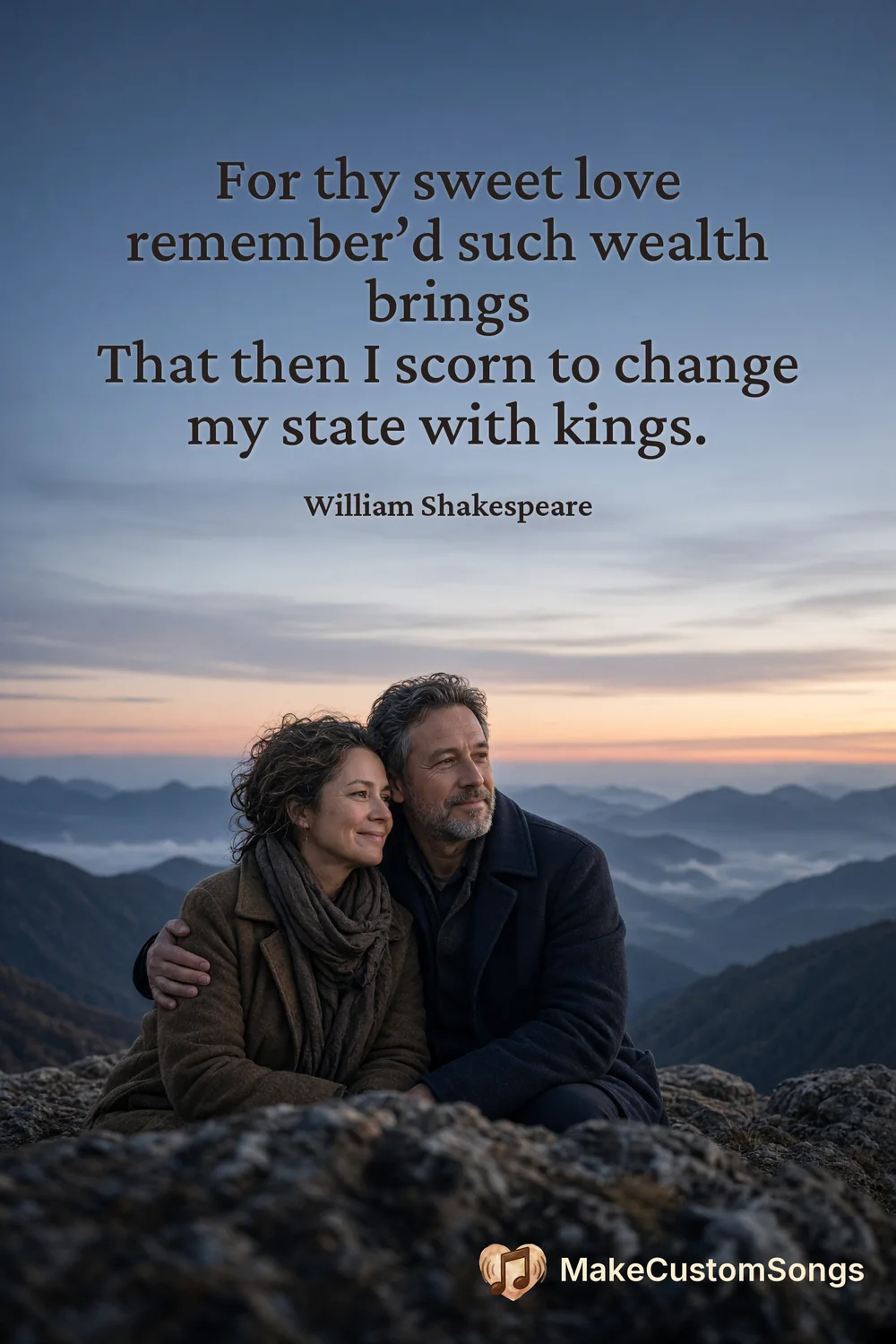
“For thy sweet love remember’d such wealth brings
That then I scorn to change my state with kings.” — William Shakespeare
The sonnet begins in disgrace, envying other men's hopes and friends, until the thought of the beloved lifts it like a lark singing at heaven's gate.
Source: Shakespeare's Sonnets — Sonnet XXIX (29), closing couplet
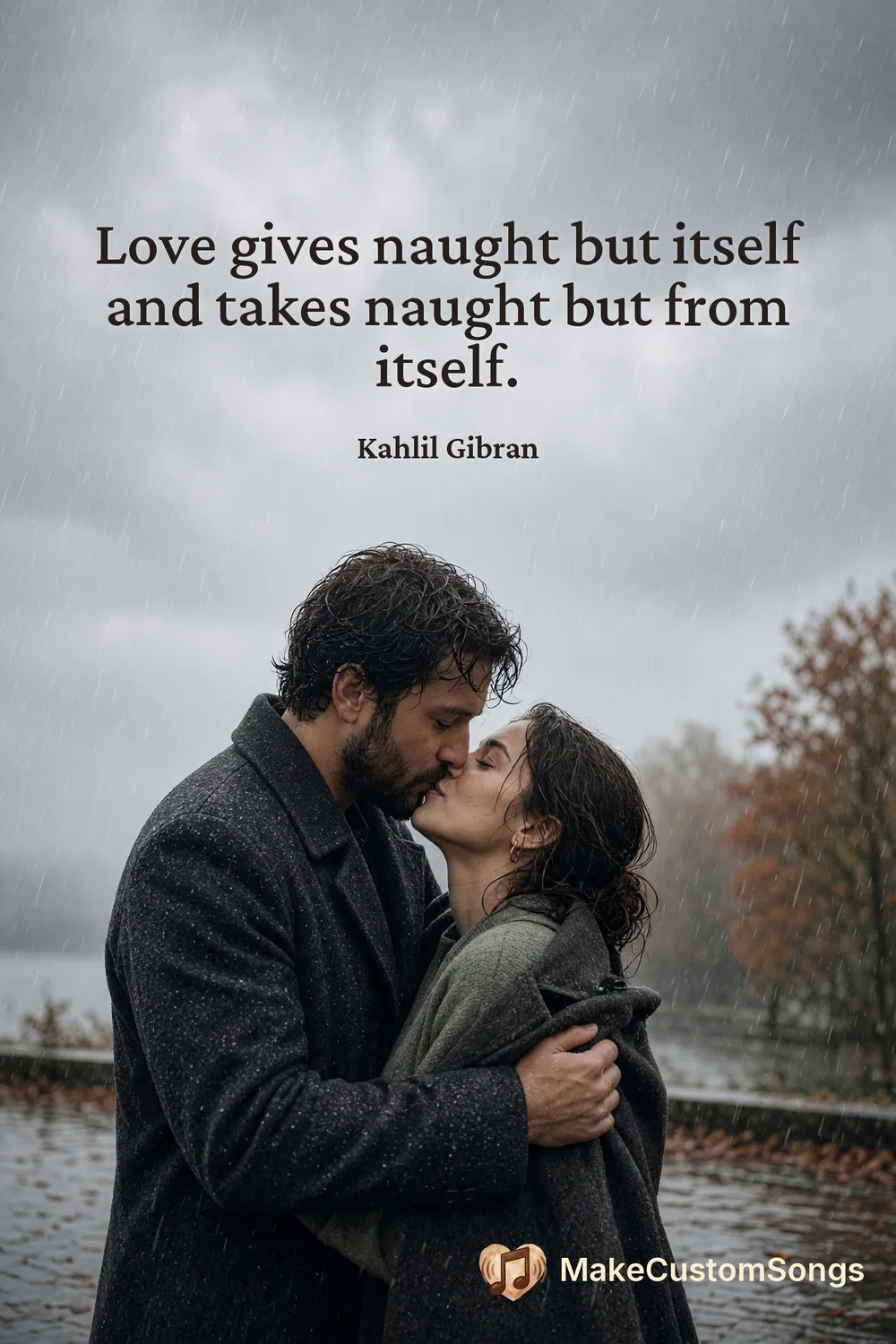
“Love gives naught but itself and takes naught but from itself.” — Kahlil Gibran
From The Prophet; the next lines say that love neither possesses nor wants to be possessed.
Source: The Prophet — On Love, paragraph beginning Love gives naught
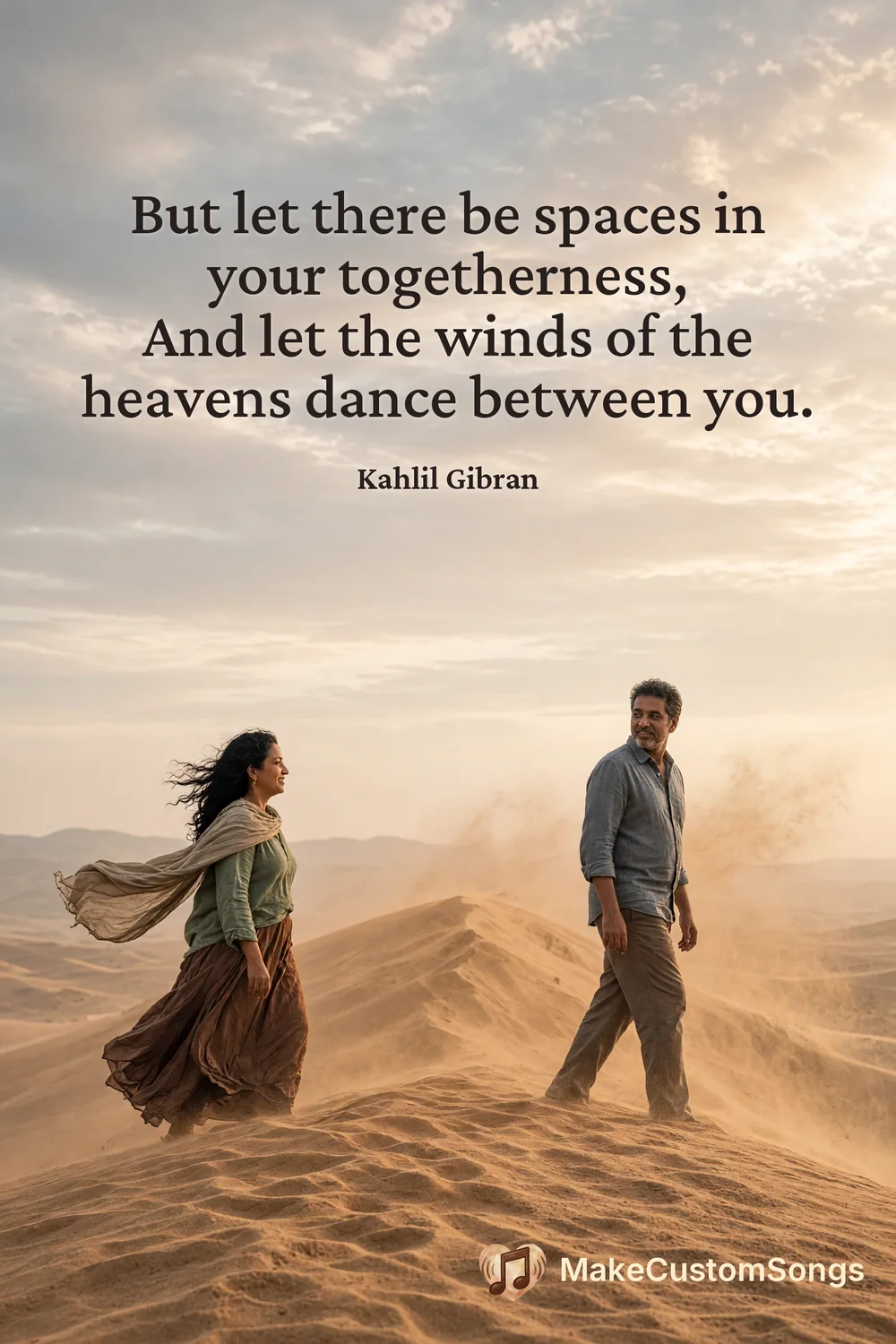
“But let there be spaces in your togetherness,
And let the winds of the heavens dance between you.” — Kahlil Gibran
From the chapter on marriage; the passage goes on to say love should be a moving sea between the shores of your souls, and that each should fill the other's cup but not drink from one cup.
Source: The Prophet — On Marriage, after the opening paragraph
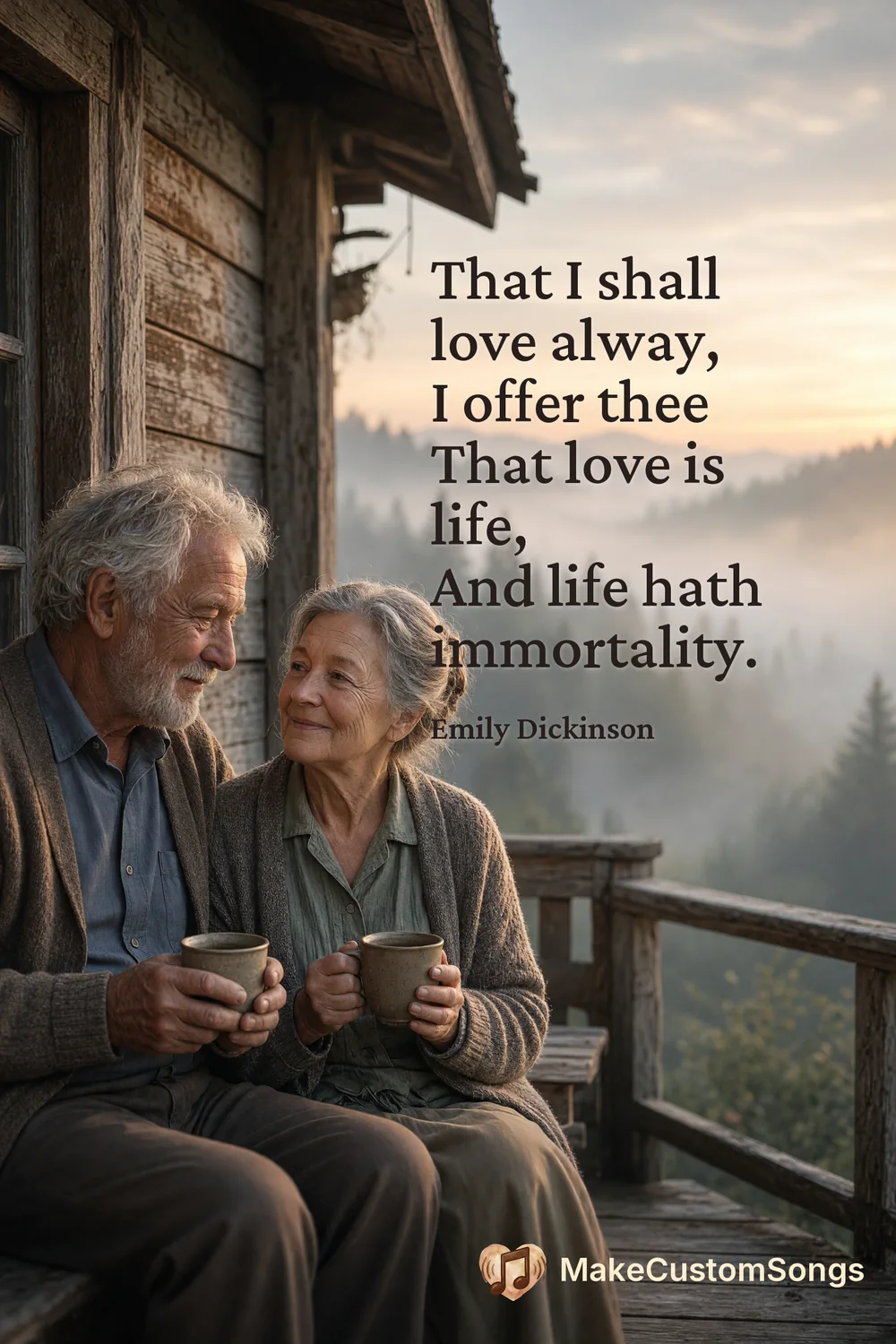
“That I shall love alway,
I offer thee
That love is life,
And life hath immortality.” — Emily Dickinson
The poem is built as evidence: proof that she always loved, and an offer that she will love always, because love is life and life does not end.
Source: Poems by Emily Dickinson, Three Series, Complete — First Series, Love, poem VIII (editorial title Proof), second stanza
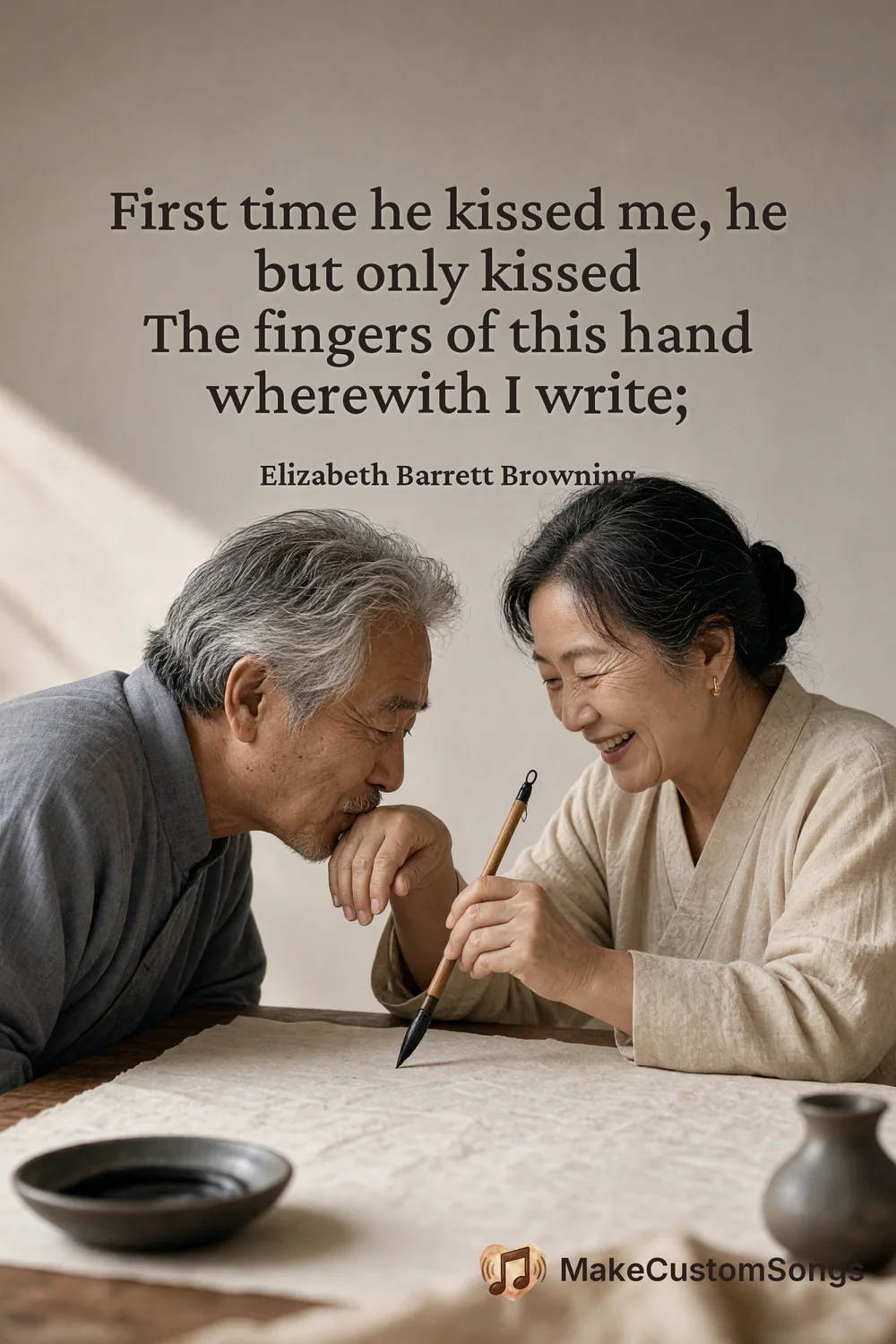
“First time he kissed me, he but only kissed
The fingers of this hand wherewith I write;” — Elizabeth Barrett Browning
The sonnet counts three kisses; the first landed on the fingers of the hand she writes with, and she says it has been cleaner and whiter ever since.
Source: Sonnets from the Portuguese — Sonnet XXXVIII (38), lines 1–2
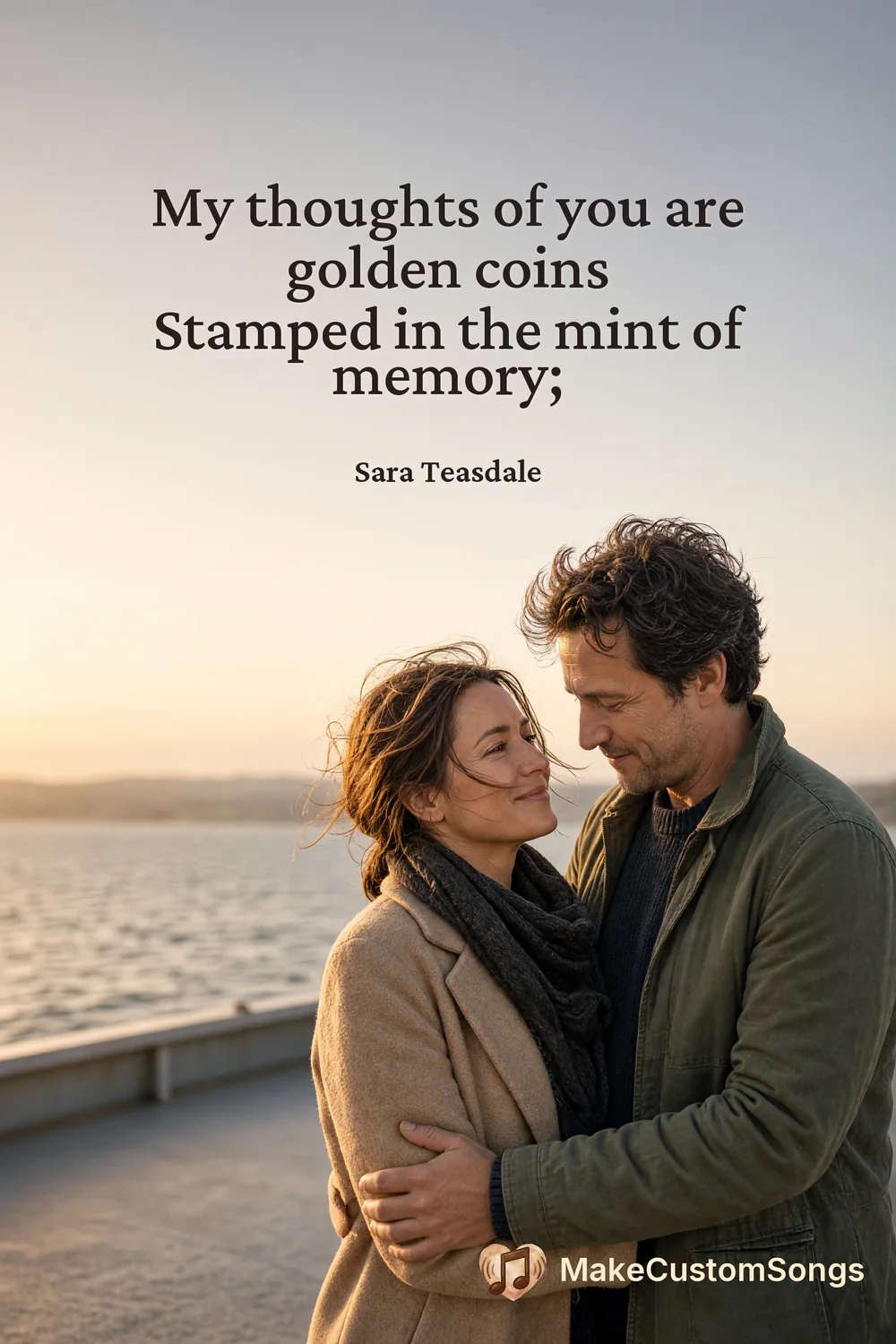
“My thoughts of you are golden coins
Stamped in the mint of memory;” — Sara Teasdale
The poem admits she has no riches but her thoughts, and says she must spend all of these coins in song.
Source: Love Songs — Riches, lines 3–4
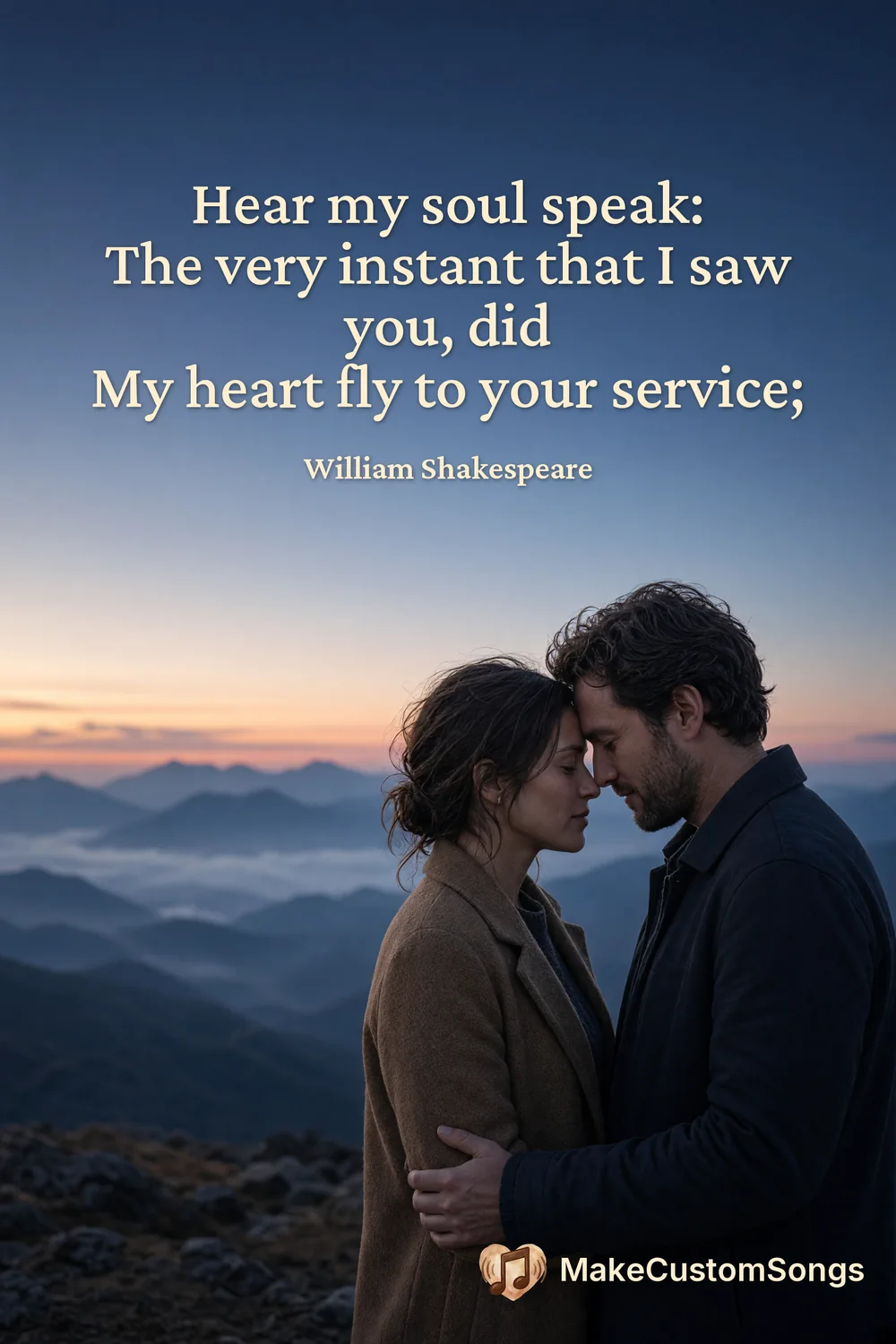
“Hear my soul speak:
The very instant that I saw you, did
My heart fly to your service;” — William Shakespeare
Ferdinand, a prince, is hauling logs at Prospero's command when he says this to Miranda; she answers by asking, simply, Do you love me?
Source: The Tempest — Act III, scene I, Ferdinand to Miranda
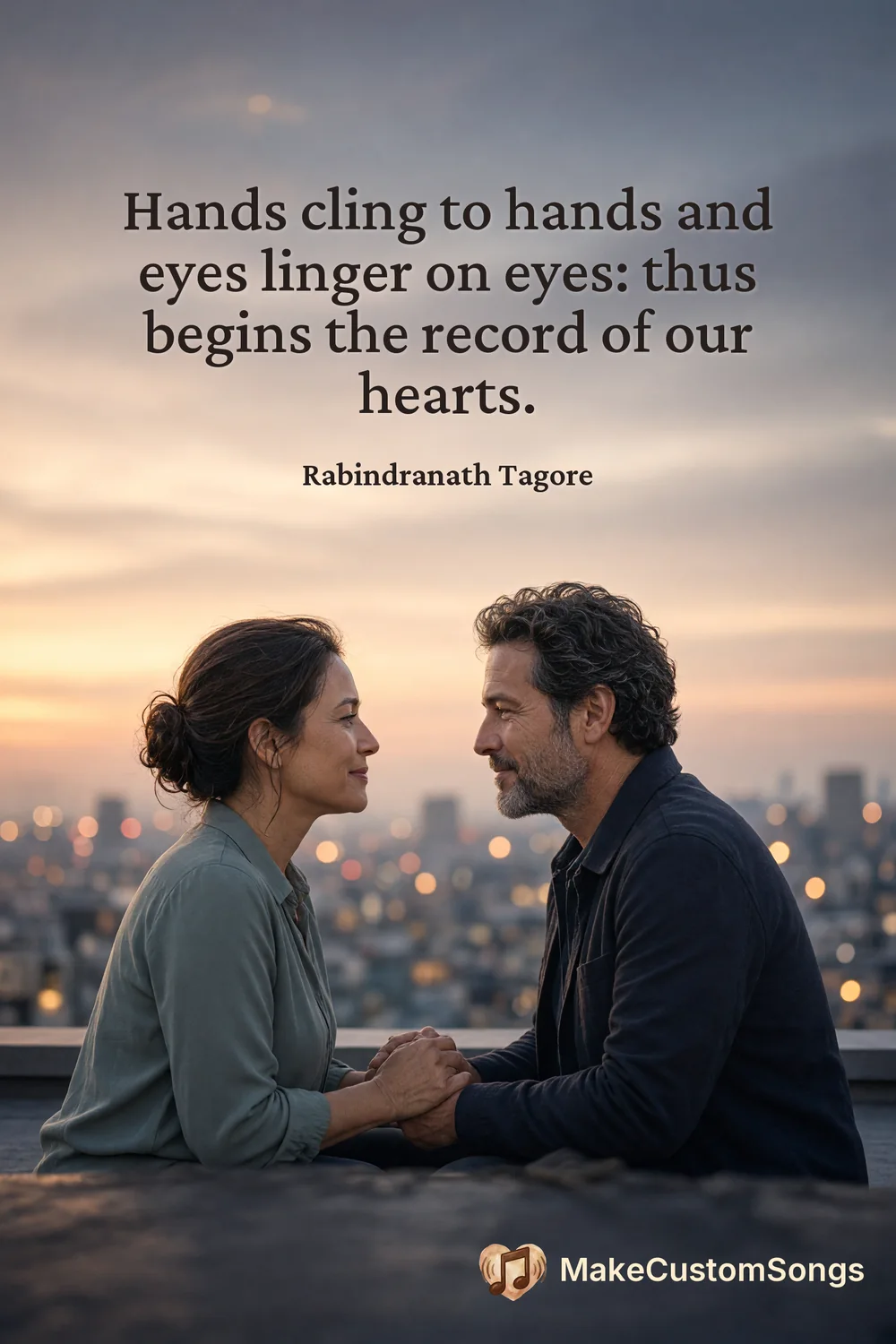
“Hands cling to hands and eyes linger on eyes: thus begins the record of our hearts.” — Rabindranath Tagore
The opening sentence of the poem whose refrain is that this love is simple as a song; the scene is a moonlit March night.
Source: The Gardener — Poem 16, opening sentence
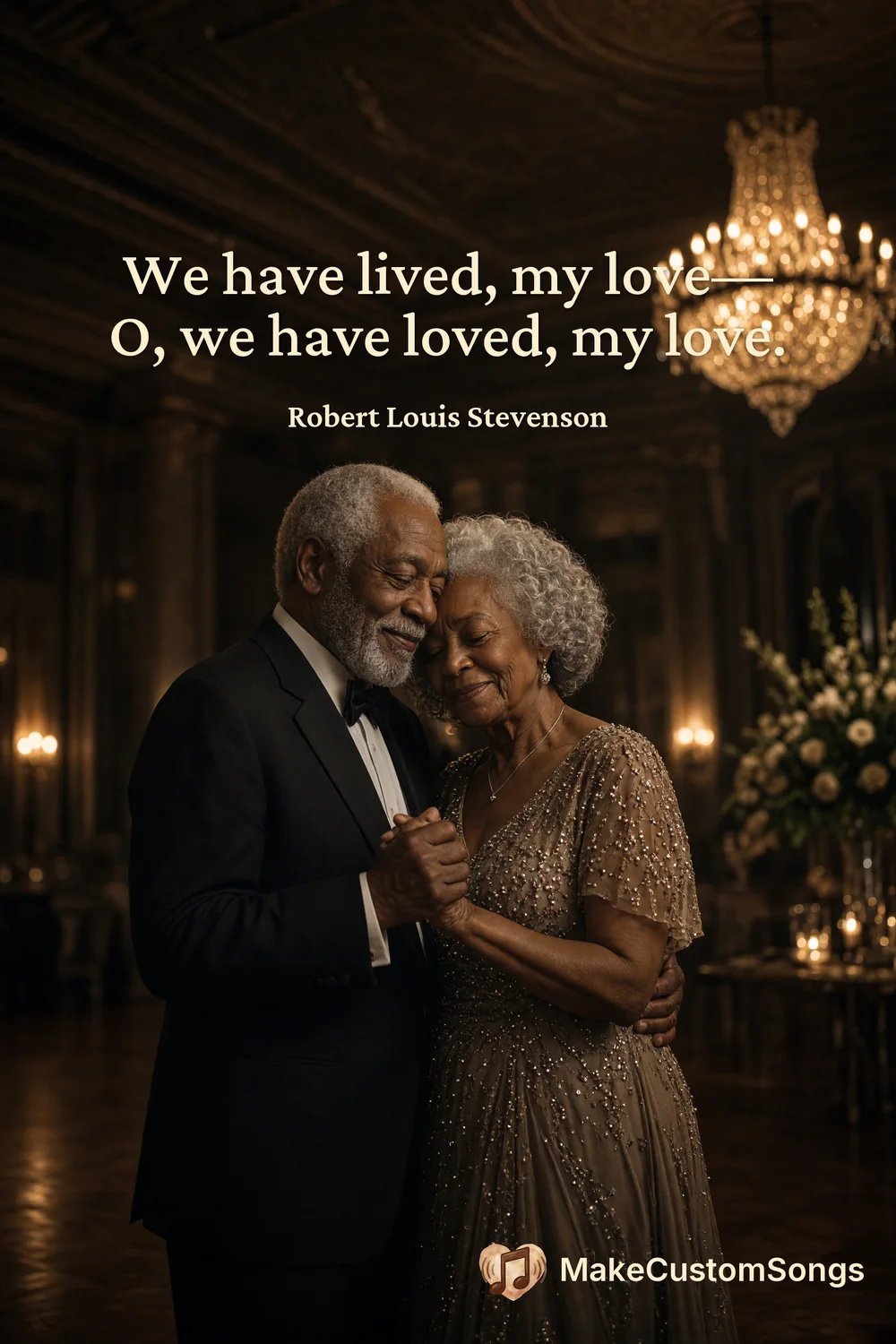
“We have lived, my love—
O, we have loved, my love.” — Robert Louis Stevenson
The poem looks back on a summer night in a boat filled with flowers, then jumps to winter, with the couple dozing by the fire like Darby and Joan.
Source: Songs of Travel and Other Verses — Songs of Travel, poem XII, We Have Loved of Yore, end of second stanza
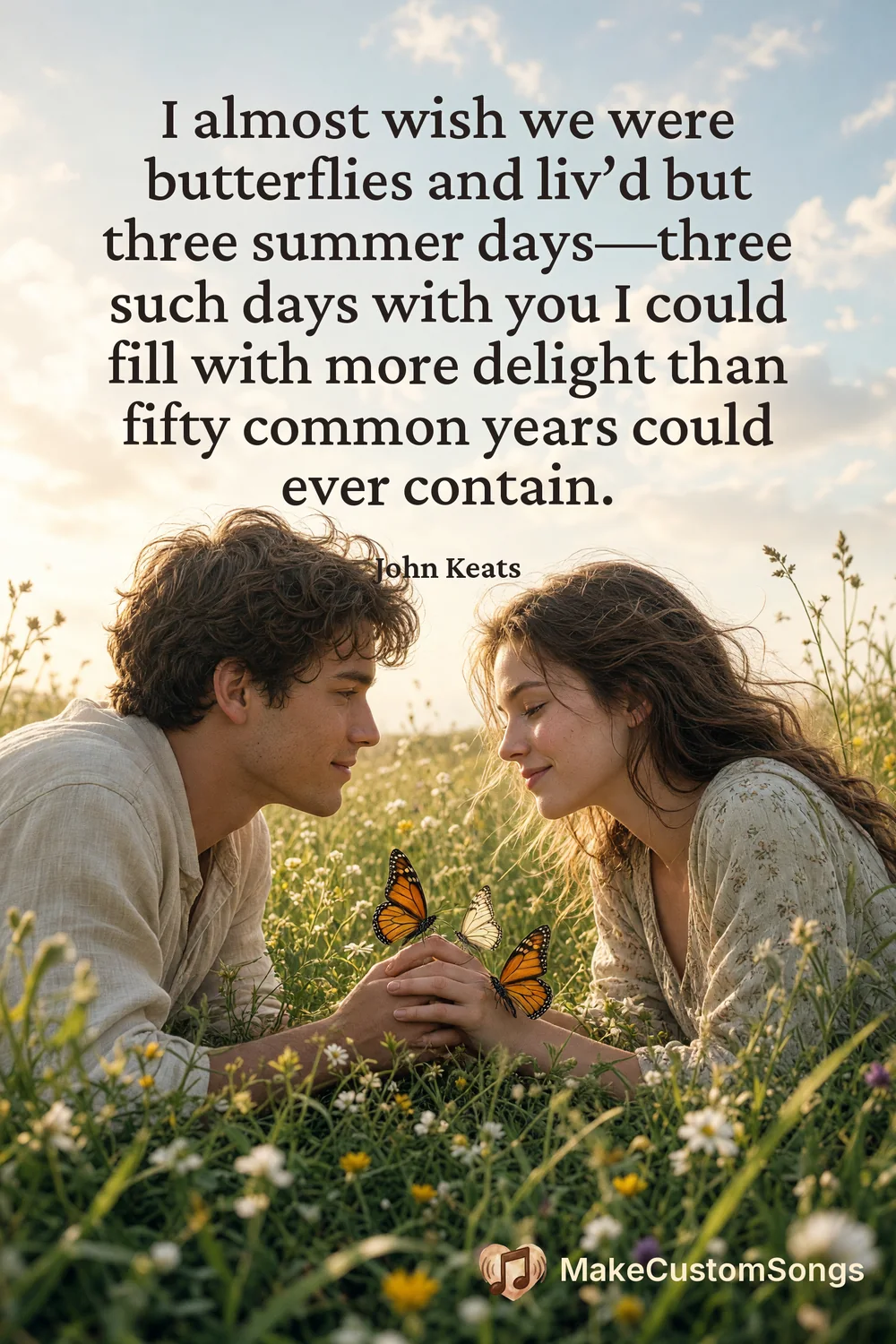
“I almost wish we were butterflies and liv’d but three summer days—three such days with you I could fill with more delight than fifty common years could ever contain.” — John Keats
From the first letter in the published collection of Keats's letters to Fanny Brawne, written from the Isle of Wight in July 1819; he says he wants a brighter word than bright and a fairer word than fair.
Source: Letters of John Keats to Fanny Brawne — Letter I to Fanny Brawne, Shanklin; postmarked Newport, 3 July 1819; begins My dearest Lady
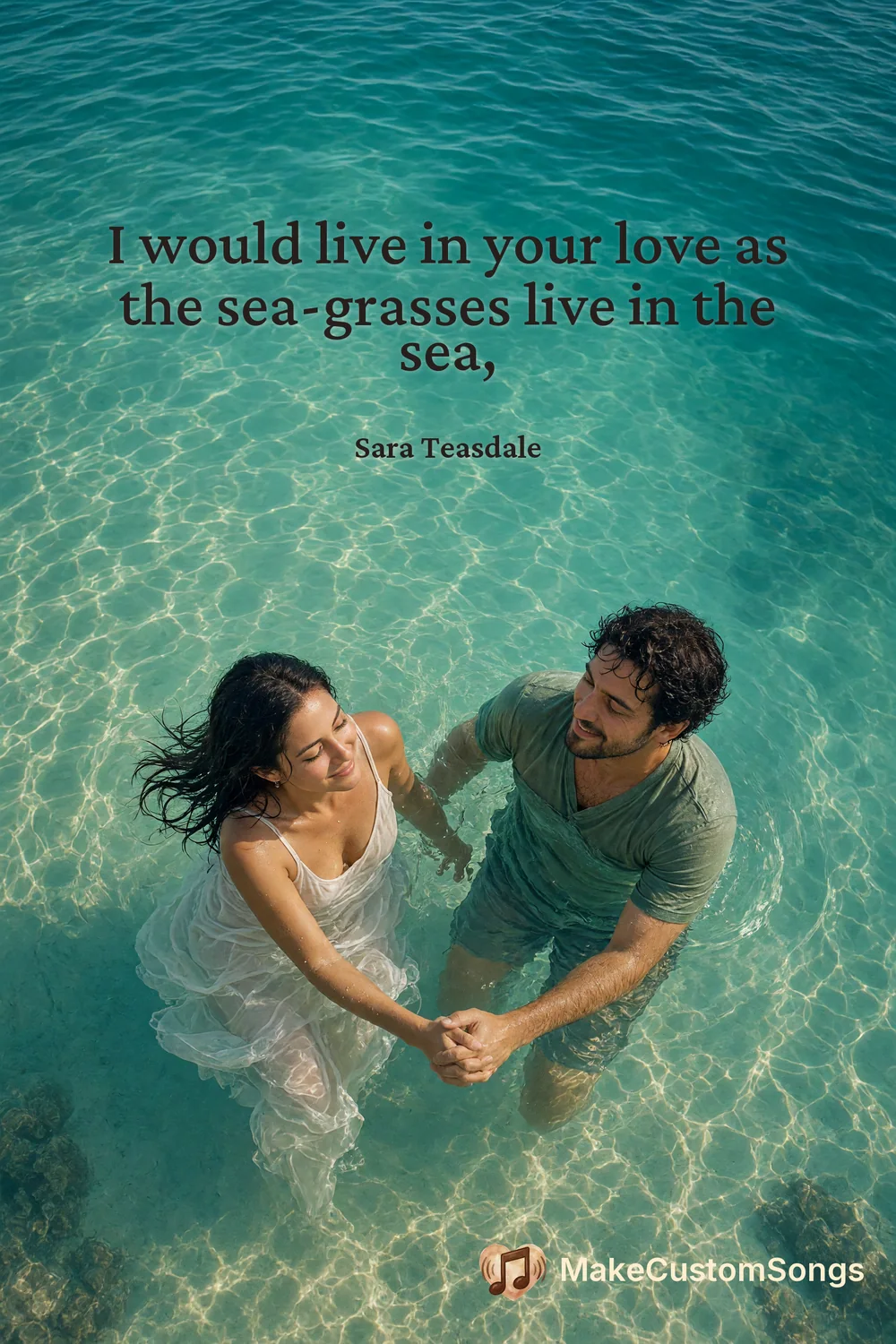
“I would live in your love as the sea-grasses live in the sea,” — Sara Teasdale
The poem continues: borne up by each wave as it passes, drawn down by each wave that recedes.
Source: Love Songs — I Would Live in Your Love, line 1
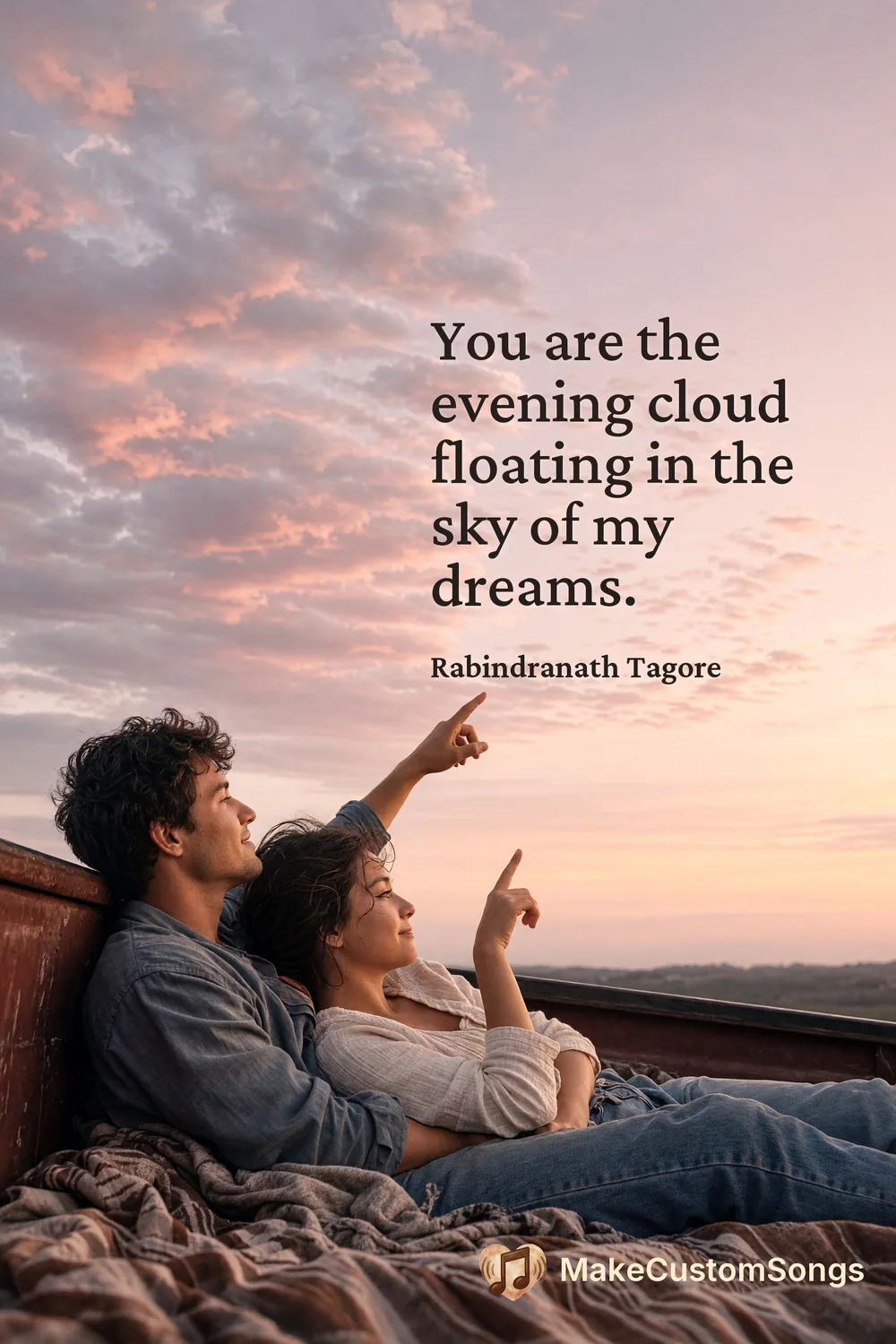
“You are the evening cloud floating in the sky of my dreams.” — Rabindranath Tagore
The poem goes on: I paint you and fashion you ever with my love longings; you are my own, my own, dweller in my endless dreams.
Source: The Gardener — Poem 30, opening sentence
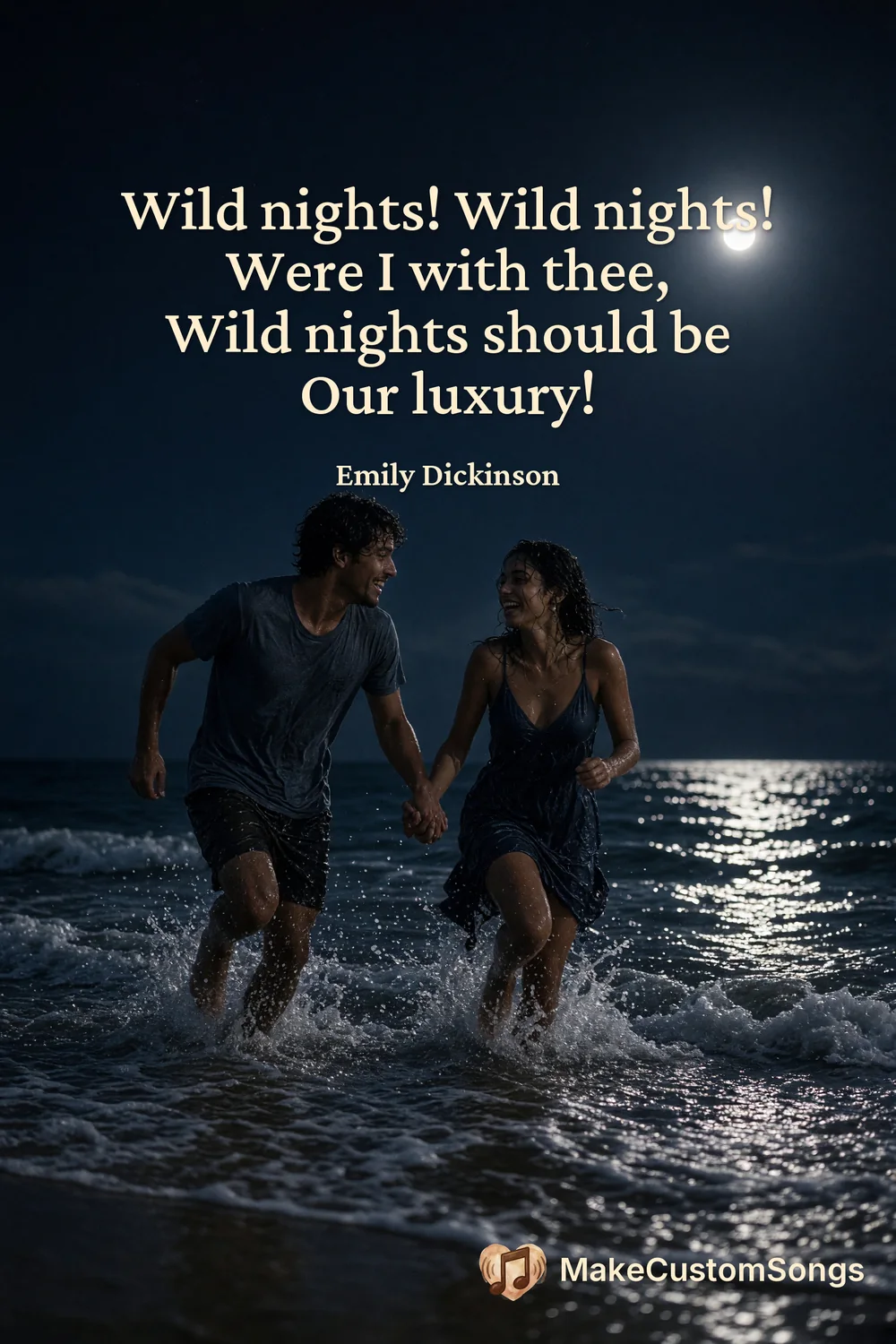
“Wild nights! Wild nights!
Were I with thee,
Wild nights should be
Our luxury!” — Emily Dickinson
The second stanza says winds are futile to a heart in port, done with the compass, done with the chart.
Source: Poems by Emily Dickinson, Three Series, Complete — Second Series, Love, poem VII, first stanza
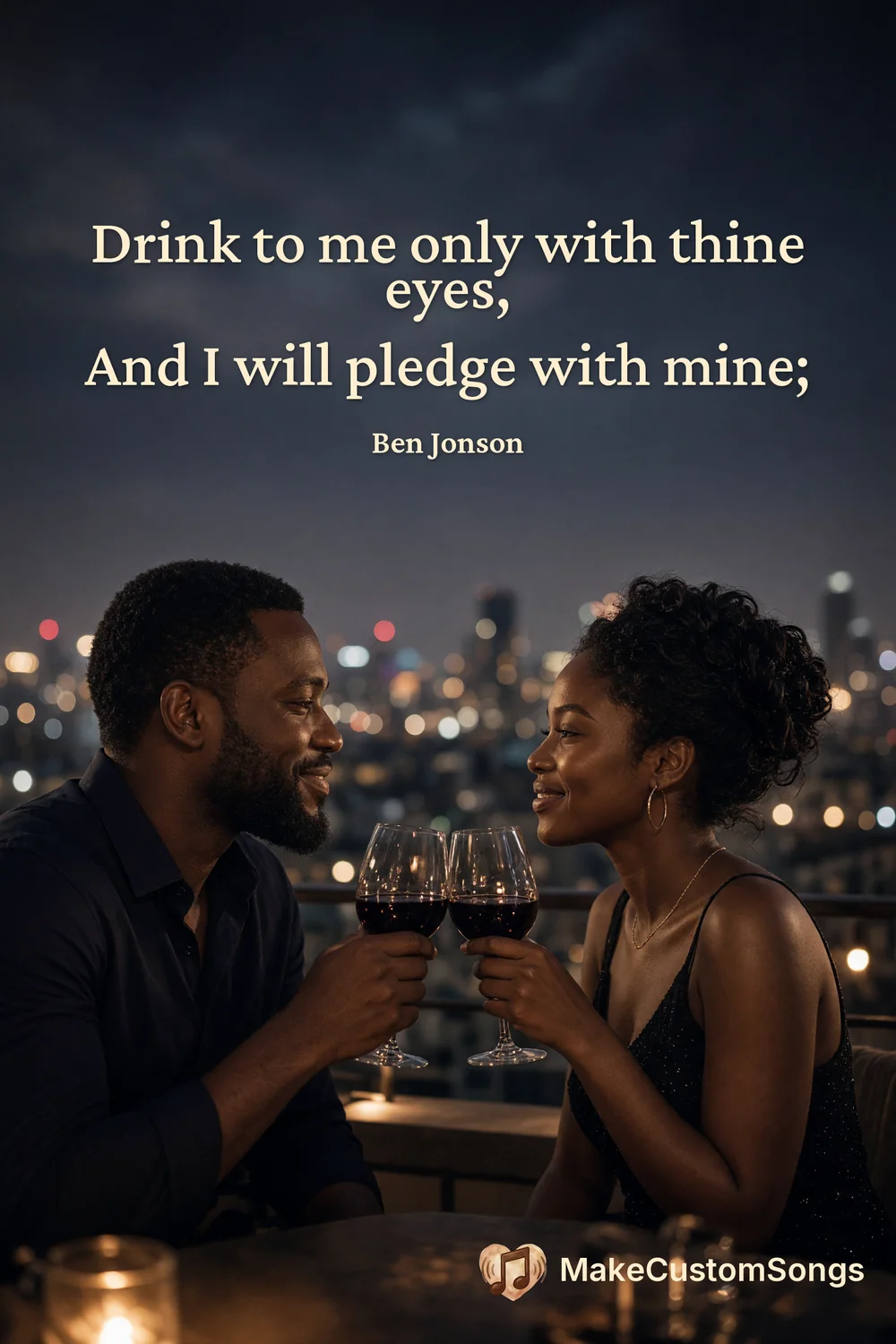
“Drink to me only with thine eyes,
And I will pledge with mine;” — Ben Jonson
The song continues: leave a kiss in the cup and he will not look for wine, because the thirst that rises from the soul asks for a drink divine.
Source: The Golden Treasury — Poem CXVI (116), To Celia, opening two lines
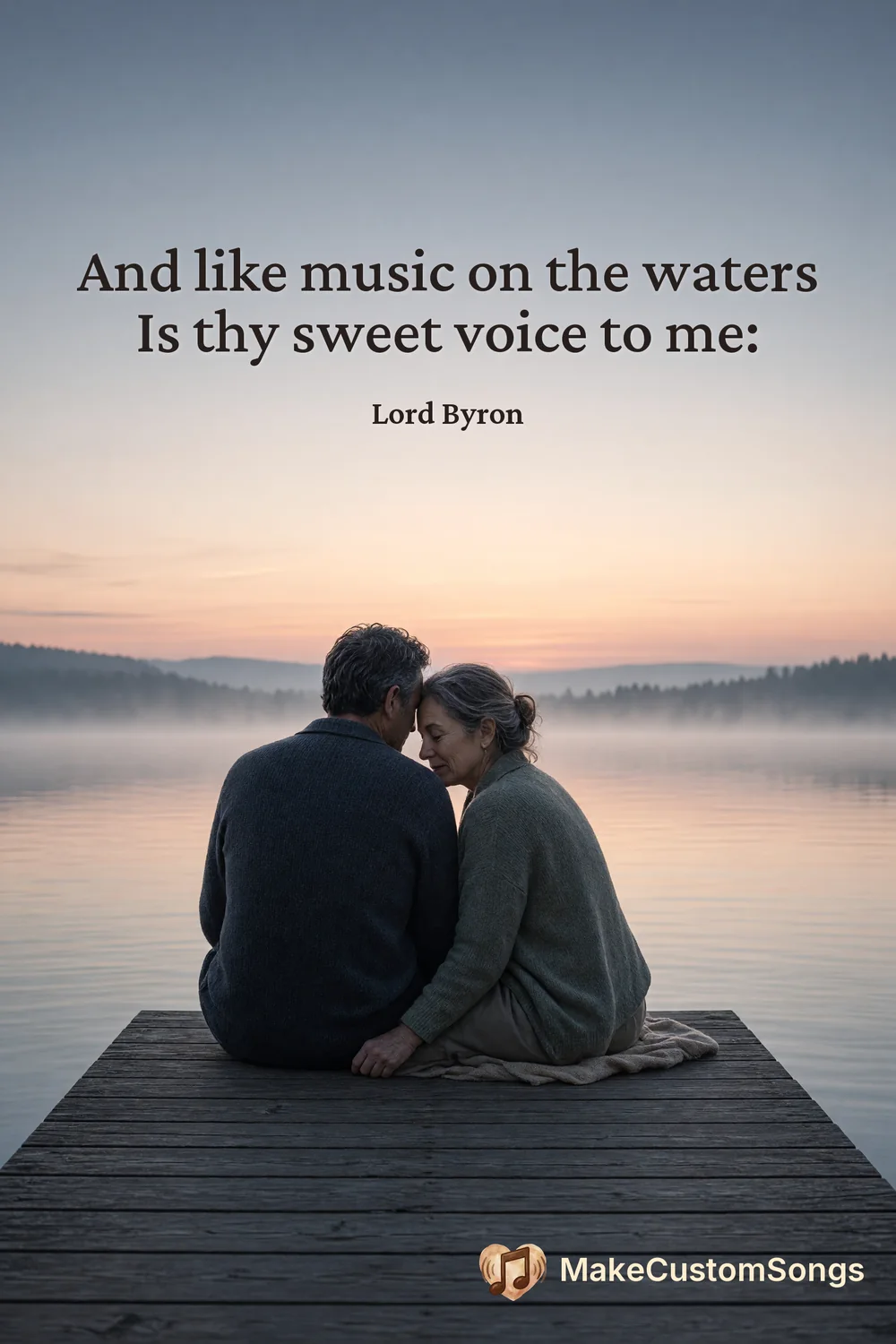
“And like music on the waters
Is thy sweet voice to me:” — Lord Byron
The poem opens by saying none of Beauty's daughters has a magic like hers, and the following lines imagine her voice making the ocean pause and the waves lie still.
Source: The Golden Treasury — Poem CCXIV (214), beginning There be none of Beauty's daughters, lines 3–4
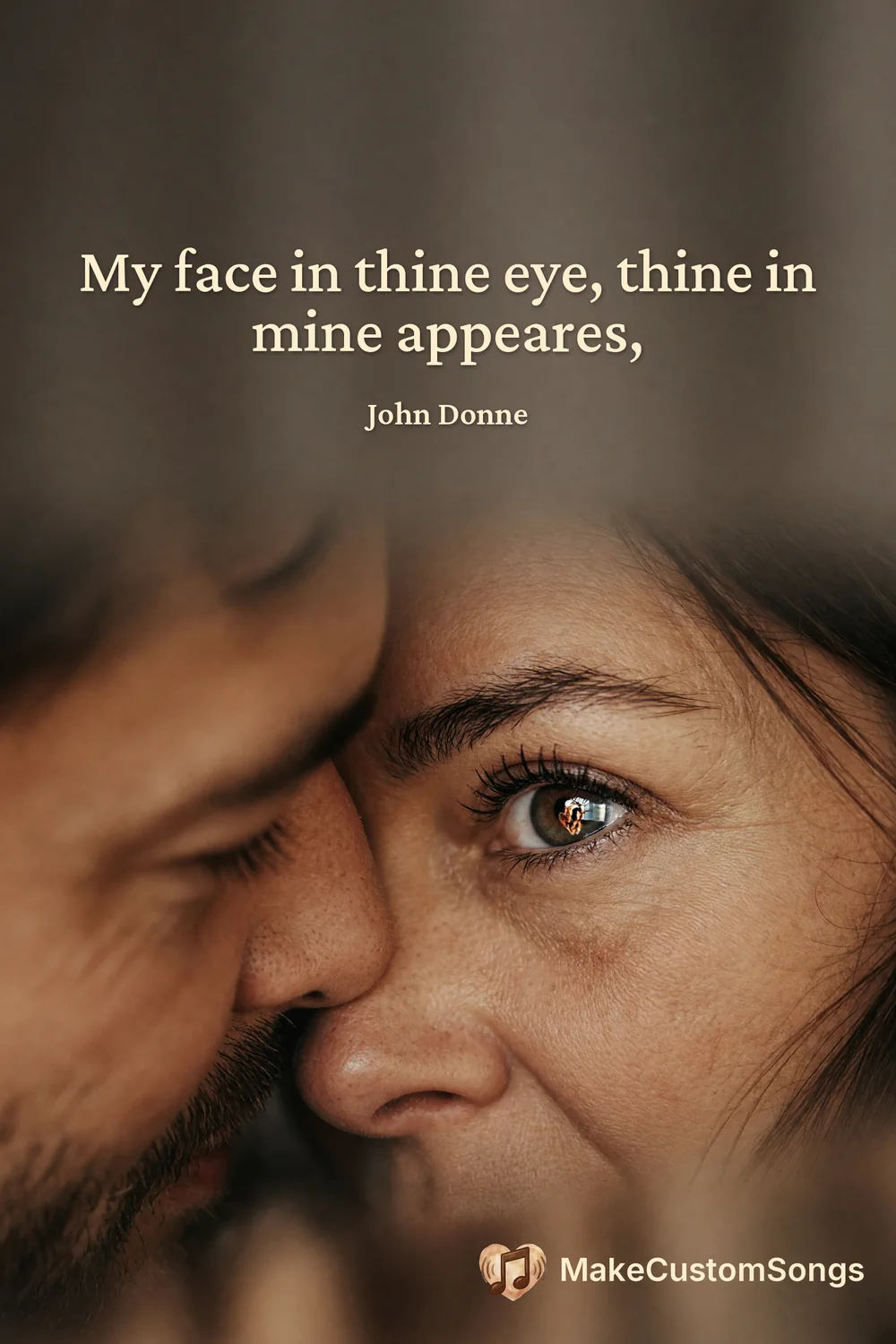
“My face in thine eye, thine in mine appeares,” — John Donne
Two lovers waking together; the line before says let us possess one world, each hath one and is one, and the line after asks where two better hemispheres could be found.
Source: The Poems of John Donne, Volume I — The good-morrow, line 15
Turn that memory into a song
A borrowed line opens the card. Your own memory is what makes it theirs. MakeCustomSongs turns those details into a song written for the person you love.
Create your custom song